Tag Archive for: Columns

Posts

With the recent coverage about modern cars, it’s time to renew our attachment to those loveable Tubs, which is the basis for these monthly columns. The very best way to do that is to get back on the road. So let’s take a drive to the Catskill Mountains in New York.

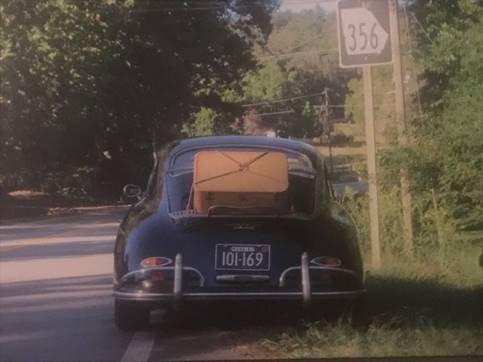
 As many know, the 356 Registry has groups all over the world, and many of them have annual events like the TYP356NE, the local New England region. One of the active groups is FOG, or the Florida Owners Group. Every other year they organize what is called the Helen, GA Drive. Helen is a town set up back in the ’60s with a German theme to attract tourists after the lumber industry died. Touches of Bavaria are everywhere, and a local road is Rt 356.
This image has an empty alt attribute; its file name is 356-rd.jpeg

 A group of us have made the run down to the north Georgia mountains four times now. There are BBQs, swap meets, and lots of drives on mountain roads (like Tail of the Dragon), all in a low-key, run what you have brung atmosphere.  Collecting more Tubs while passing through NJ, PA, and Maryland made for a great caravan. Over the years, we have talked about having the same sort of event up north on alternate years.

Since 2020 was an open year, a few of us started planning back in 2019 and found a great location near Catskill, NY, a German resort from the ’50s that was still operating. It is called Riedlbauers Resort, has over 50 rooms, a banquet hall, and is surrounded by Porsche roads that run all over the Catskills. Brother Bill set about designing drives for the group, and a couple of guys drove over from New Jersey to take an onsite look.  

 It looked like a go, and the wheels started turning, but we all know what happened to the summer of 2020. Everything was put on hold.

This year is the Helen Drive again, but we’re gearing up for 2022, which will be called the Catskill Treffen.  Given the time available, it was decided that we should all gather at the Resort in Round Top, NY, to do a recon weekend. The end of July looked good for everyone and a couple of guests, so the Tubs were gassed up and pointed to the woods. By now, one of our group was voted in as a Registry Trustee, so we even had a VIP in our midst.

I decided that – rain or shine – the Speedster was going. The convertible top is still in the garage loft, but as many know, I’ve been wet before. I’ve had that car for 45 years, and my brother has had his for 55 years. In all those years, they have only been together a few times. My restoration was finished in 1999 and his in 2010. When he had his car at the last few Helen drives, I had the Puddle Jumper. When he drove his Speedster to the NJ holiday, I took a ’65 SC I had at the time. It was time that they got together again. 
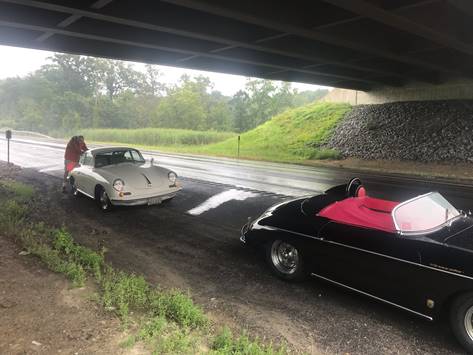
The weather forecast looked iffy the first travel day, but the following three days looked perfect, so Jeff Leeds and I took off on the Mass Pike after rush hour. There were only a few sprinkles until we got past the Lee exit, and then the sky opened. Thank goodness for overpasses. The first one available was filled with two large black Suburbans, but just a couple miles further, there was space.

The rain only lasted about 30 minutes and then it was only another hour to the resort. Bill and Bev had come in the day before, so the two Speedsters posed for a photo opportunity in front of the main building.

The resort includes breakfast, but unlike the big chains like Super 8 or Hampton Inn, they serve only sit down, and it starts at 8:30 am. Only. Did I mention it was a family-owned German resort? There are eggs any way you want them, bacon, sausage, and two kinds of cereal. A pitcher of orange juice, coffee, and milk was on each table. They also alternate French toast and pancakes, but they don’t serve both on the same day, so if you want pancakes, it better be the right day. Everyone working there seems to really like what they’re doing, and the place has a really nice family feel to it. The family owners can be seen clearing tables and serving food when needed.  Dinner is similar, and the menu is posted, so you know what to pick. It’s all served family-style with plenty of bread and butter on every table. 

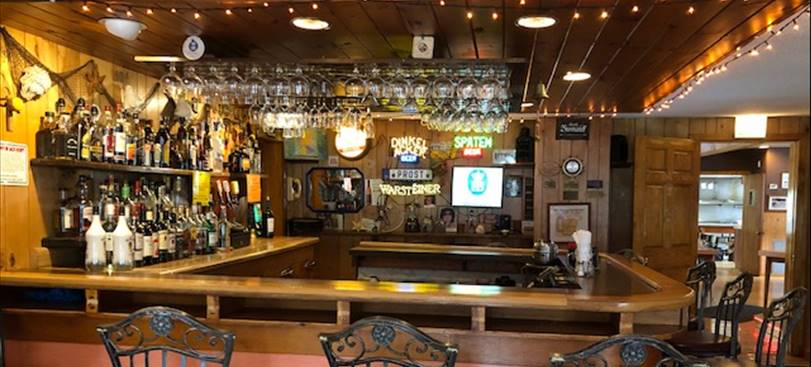
The bar has a great vibe with lots of German beer on tap, and Johnny and Jack are there too, our kind of place. There’s even a Juke Box that plays 45 rpm records, period-correct, of course.
We drove two of the tours that Bill had laid out, with the one on Sat ending at a small airfield with an airshow in the afternoon. The Old Rhinebeck Aerodrome has  8-9 operating biplanes that put on a great show. One of the oldest that was flying was a 1911 Curtiss Pusher Model D. 

Short rides are offered in an open cockpit biplane which Bill and I jumped into. It flew at a speed that our Tubs would’ve seen in third gear and went over the Hudson River, doing a couple of sharp turns to get back to the grassy runway.

The show lasted almost 2 hours, and they do it every weekend in the summer, both Sat and Sun. Big crowd, lots of kids, and great fun. They even had a separate parking spot for us near the runway so we could be part of the show.

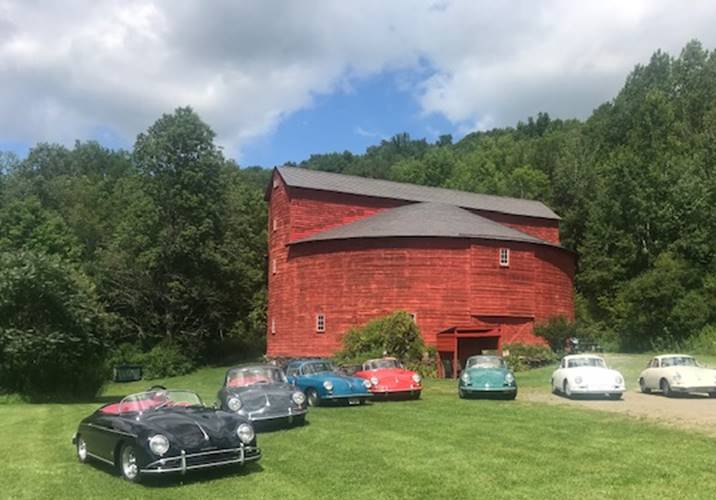
Another driving tour took us over some great Porsche roads and to the first round barn I’ve ever seen. We took a group shot to be used next year to promote the event, but when word gets out what a great area the Catskills are, I don’t think we’ll have a problem filling all the rooms.
Blackie ran great all weekend, made a lot of noise, and posed for photos when returning home on the Mass Pike. Somewhere around Exit 2 (now Exit 27? What?), one cylinder became part-time and only came to life under full throttle. I, of course, completely overthought the problem and had everything from a clogged main jet to an out-of-time distributor as the cause. I didn’t want to stop because it was running well enough to keep up with traffic, and stopping on the Pike has its own set of problems. It is classified as a restricted road and is not covered by AAA. If you must be towed, the State Police will send a tow truck that will tow you to the nearest exit, where you can then call AAA. The State Police contract says the nearest exit is $256 away. No wonder they show up so fast. Don’t ask me how I know that.

That ride gave me two hours to worry about what the problem could be. When I got home, it was lunchtime, so I let Blackie cool off, had a bite, and then jumped into the engine bay. I pulled the carb main jets first, they were clean, then checked the timing with a static light, and it was fine. I was going to pull the spark plugs to see if one was faulty, and the first one I reached for was number 3. The plug connector was just lying in the hole near the plug but not connected. I certainly don’t know how it came loose because nobody had been in the engine compartment except me, and it ran great all weekend. It also ran strong under full throttle, which doesn’t make sense if one plug wire was off.

I can only assume that Blackie was having such a great time in the Catskill Mountains playing with his friends that he didn’t want to go home.  These old cars are like that, trust me. The more you drive them, the better they run. Until it’s time to go home? – KTF
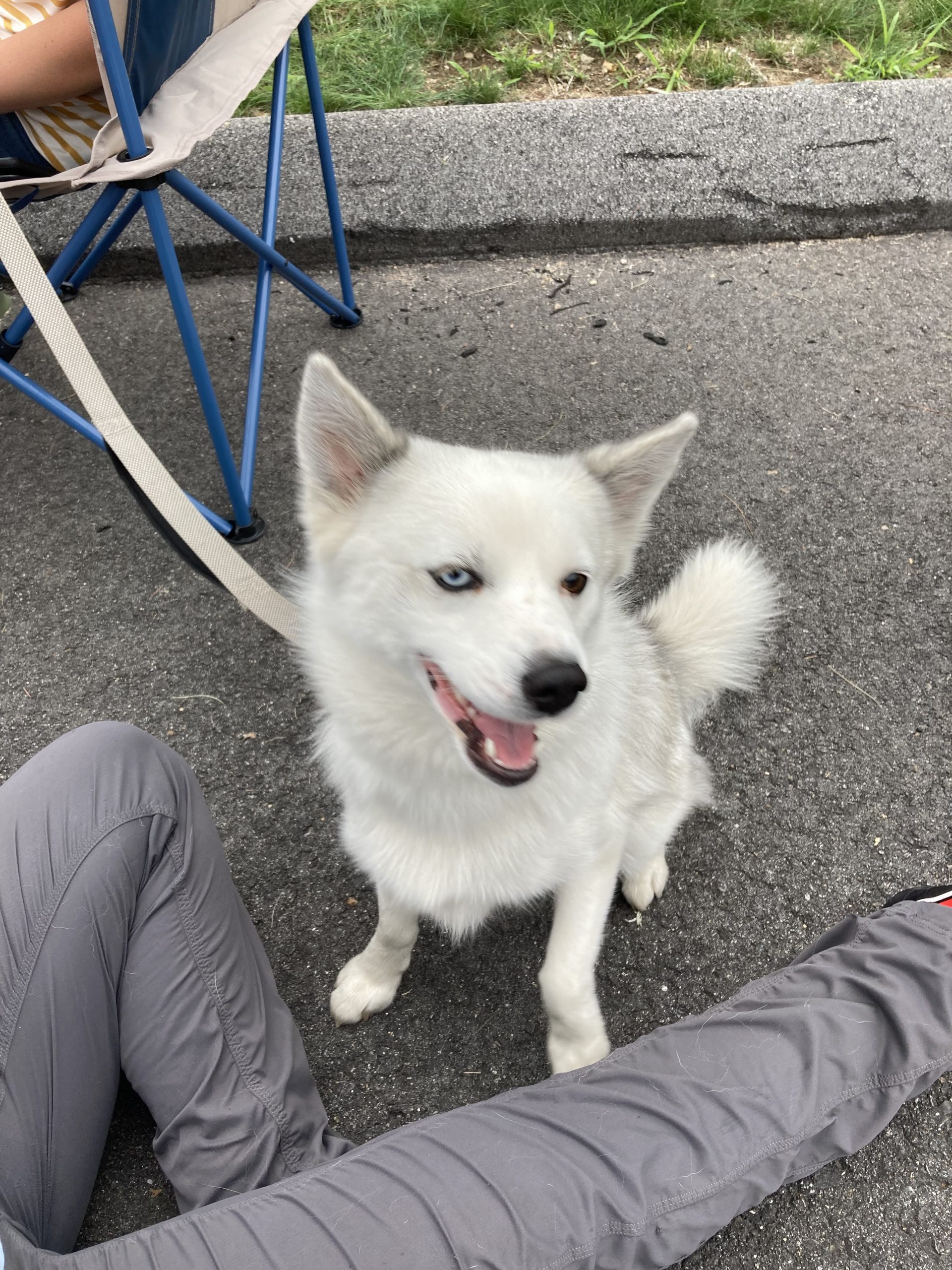
My longtime reader may recall a couple of columns that told the fictitious story of our dog Turbo and cat Gordo (RIP) participating in Autocross events. In point of fact, Turbo would probably be the least likely canine to have done so as he is a terrible car passenger. Rosemary believes this stemmed from an incident in his youth when I took him for a ride in a rental SUV.  Our minivan had been in an accident (not my fault!), and we were provided with a GMC Yukon.  I had no experience with a four-wheel-drive vehicle, so when it snowed one night, I took it out for a trail run and invited Turbo.  In two-wheel-drive, it fishtailed up a hill, but when switched to four-wheel drive, it powered up the hill as if it was dry.  Unfortunately, we then had to go down the other side of the hill, and four-wheel drive doesn’t help braking, and we slid (gently) through a T-intersection into a tree.  Turbo, unbelted in the passenger seat, met the windshield. Mind you that Turbo had often hit a tree with more force while chasing a squirrel, but it apparently got stuck in his dog brain permanently.  So now, when he is in a car, he is very agitated, pants rapidly, and refuses to lie down.  We have tried all kinds of drugs, including Benedryl, valium, and CBD oil which do cause him to lie down but don’t stop the panting and make him goofy when we get where we are going.  So Turbo is not a candidate to go to DE events.  But there were two very nice dogs at the recent NCR Tamworth event, and they appeared to enjoy themselves.  Dogs are allowed at DE –  of course, they must be leashed – and it is nice when whole families participate (Chris DeGrace had his kids there, for example).  Silver (my student’s dog) and Bruce were very well behaved and added to the fun.


NCR put on another nice event, and I managed to get in 3 runs each day between the raindrops (open cockpit and no rain tires and no interest in tempting the fates).  I was slower than previous Tamworth efforts, which I attributed partially to a less sticky track but more to just inconsistent driving.  I struggle more at Tamworth than other tracks. I’m trying to get better with using brake markers, but my speed through turn one at Tamworth can vary by as much as ten mph.  Also, there are two different approaches (or at least I think there are) to the Turn 2A – 3 sequence, and I rarely get that to my satisfaction. Finally, the braver part of me says I should be flat from Turn 7 through 10, but my right foot doesn’t seem to buy into that.  (When I look at data, I’m at 1.5g and over 90mph, so my right foot may have a valid point.)  In any event, the 15-year-old SCCA wunderkind is 4-5 seconds faster than me in a similar car, so clearly, I’m leaving something on the table.

While I love the track at Tamworth, the infrastructure is lacking there and you are required to leave your trailer in an upper gravel parking lot to leave room for all the track cars in the paved lower lot. This makes for a hassle, particularly when it rains on and off. The good news is that the upper lot may be paved in time for the second NCR event later this year.  The other drawback to Tamworth is that the hotel accommodations are pricy and weak. Thanks to Kristin we were booked into a really cool Airbnb – a bit off the beaten path but very spacious – and it made for a nice social weekend.


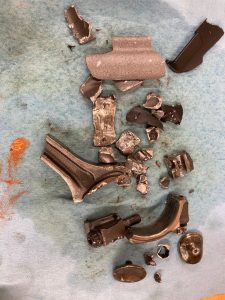
And bad news for the Jamaican Bakin’ Endurance race team.  We are still in the process of fitting the new motor as we wait for the oil cooler to come back from the cleaner (a fancy aircraft supplier outfit that gets all the little bits of metal out so we can reuse it) and wrestle with some electrical connector mismatches between the new wiring harness and old ECU. But the bad news is that the American Endurance Racing series in which we run changed the rules for next year and has outlawed cars with a power to weight ratio (Dave correctly points out that it should be called weight to power ratio) below 9.  Our old motor had 400hp which would have been OK with our 3,600lb car (with driver and fuel) but the new motor is capable of 500hp. That was $20,000 well spent!  [Editor’s note:  I redacted that – Rosemary might read your column, Bill.]  Our hope is that we can find an ECU tune that limits the horsepower, spreads it over a wide band, and produces lots of torque.  Broken Connecting RodWe also did more of an autopsy on the dead motor – the oil pump is fine, so it appears that either it dropped a valve or the connecting rod just failed.  Enjoy the pictures of the debris!
Finally, by the time you read this, we will have had the Summer Party.  I’m sure it was a blast, and I hope I did well in the Cornhole Contest.  Let the record show that I was the Cornhole winner at our own regular summer party, defeating one PCA board member while another PCA board member who talks a lot of trash was a no-show.

I remember being told that I was never going to find anything unless I kept looking. Like many of us in the car hobby, I am always looking.  I’m looking at parts, projects and cars but not to buy anything specific but to keep up to date on the value of things. Every now and then I’ll see something that peaks my interest enough to actually go look but it doesn’t happen often.

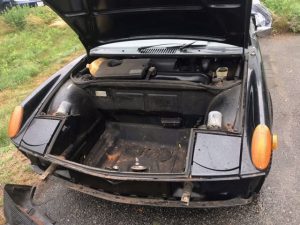
Last weekend I spotted a 914  for sale that wasn’t far away and the Facebook ad didn’t have much information but there were a couple of photos that didn’t look bad. There was no year given but because it had the large rubber bumpers on it I knew that it was a ’75 or ‘6. The hook for me was the statement that it was a running driving car and it was priced less than a 991 10k mile service.

I contacted the seller by text and got an address a couple of towns away so I set a time to go take a look. I drove to the address given to discover there was no house with the number I was given. I pulled over to text the seller who quickly responded with a house number of 141 not 41. Who doesn’t know their home address? Mistakes happen, right? Not a good sign. I was told later that it was the sellers uncle house so he didn’t know the number. OK, I’ll buy that.

The car was black in the photos but close inspection (actually I didn’t have to be that close, maybe 50 feet?) revealed that the black was covering a car that started life in  yellow.  And the black was losing its grip in a lot of places.  Strike one.  A quick look at the rear panel not shown in the ad  told me that the car was a 1.8 l not the coveted 2.0 l  engine. Strike two.

After looking at the interior, that was rather tattered, I reached down to pull the engine cover release. It was seized and wouldn’t move. I’ve seen them hard to pull or broken and flapping but never frozen.  The seller, a nice clean cut young fellow, saw my problem and quickly stepped over to help. He just reached over the roll bar and grabbed the edge of the engine cover and lifted  the whole thing up and out of the way. It was just laying there, not bolted to anything.


The first thing that jumped out at me was the big four barrel carburetor sitting in the middle of the engine. Strike three. I said something about  the missing fuel injection system and the seller asked me when Porsche went to fuel injection on the 914. This seller was not alive when this car was built and this rat was probably the only one he had ever seen. All 914’s ever built used fuel injection and that was over 50 years ago. Think about that. Very advanced back in the day.  He did start it up and it actually  sounded decent  but this game was already over for me and I wished him well with the sale.   This car was not going to follow me home.

The fact is that the days of finding projects and putting them back together are long since gone for me. I never learned to weld, even after a 10 week welding class, but I had found a real craftsman who could fix anything. If he couldn’t fix it he could make another one. But he got married, closed his shop and traded his hobby in for a real job with benefits and coverage for his family. The wise thing to do.

My painting skills consisted of popping the top off a rattle can from Walmart and giving a hanging part a steady, even coat of paint.  But I found a fellow that was a real car guy and could have painted the Mona Lisa with a spray gun. He was the only guy I ever knew that loved painting a black car and really was a master at it. Everyone else complained from the start to prepare you for a poor result. But he retired after way too many years of breathing filler dust and paint fumes. I did recently check on two shops that I used years ago but one only does insurance work and the other is under new management. If I had a car that needed paint I’d have to sell it in primer, not the best way to raise the value of a project.

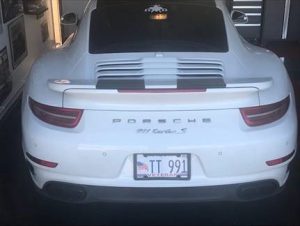
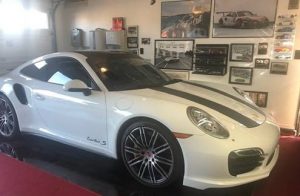
As my last few columns have indicated, I am attempting to move into the next century, with the help of son, Rob, and many younger club members. Rob located a 2015 991 Turbo S  in Las Vegas that checked all the right boxes. It was white with an expresso interior and had the glass sunroof that I preferred and center lock delete. It was very similar to the C4S in my garage except it is faster. So now he has my car in AZ and I have his car in MA.

I told him that  would meet him In St Louis to swap cars but so far no date. The kids threw a birthday party for me and a few friends at Lake Tahoe this month and that was the perfect time to test drive the Turbo. A sales job wasn’t needed to get one of the Grandsons to make the 8 hr drive up to the lake to deliver it and I got to do 4 days of test drives. The car is a rocket and really to my taste with a few stickers that Rob and the boys applied. The car is right at home following a line of traffic up a slow two lane road but show it a space and it can leap past campers and 18 wheelers with ease. The AC laughs at 110 degree temps and the satellite radio never skips a beat. The PDK gearbox is faster that any driver and my left foot stays planted on the floor. An amazing device for high speed travel that I never imagined the I would ride in, let alone own. Strange how things work out. It will be tough to leave it in AZ until transport can be set up.

There was another mission that I had while out west. Between Lake Tahoe and Las Vegas in the California Sierra mountains is the place where my father used to take us trout fishing in the ‘50’s. It was called Mammoth Mt. and that was before there were any ski lifts to be found. I always wanted to return to see if it was as I remembered when I was 10 years old. We stayed in the miners bunkhouses at a closed gold mine and each day hiked up the mountain to one of three lakes to fish.
There are campsites on the one mile road off the highway now and the trailhead right is where the cabins still stand or at least pieces of them. The bunkhouses were a little smaller than I remembered and the hike was a lot harder that I recall but otherwise the smell of the pines and the view of the lake was exactly the same. It’s nice to know that even in the new century some things just never change.

KTF

I have owned a sim racing sim rig for two years now and raced actively for a year and a half. It takes a while to learn stuff at my advanced age, and I am deeply envious of the teenagers who join the leagues and outrace me in no time flat.

Several beginners I have observed, including me, tend to start with a relatively simplistic view of what it takes to win a race: Drive as fast as you dare! That is not only a simplistic view but also wrong! To win a race, the sum of your lap times must be less than the sum of your competitor’s lap times, and there is a lot to that.

So, let’s dive into how to have short lap times!

The single biggest issue is making mistakes and losing control. The typical lap time for road racetracks is more or less two minutes, and the usual number of laps for a race in the PCA league is around 20. If you spin, you will typically lose 15 seconds in the lap. It can be much longer if you have to wait for a gap in the other racers to re-enter the track. I have had to wait more than 20 seconds to get back on track, and then I have to accelerate to get up to race speed, which also costs time. So, what is the impact of that spin? Take the scenario that your error-free lap times are 1 second faster than your buddy Joe’s. If neither of you makes a mistake, you will be 20 seconds ahead of him at the end of the race. That is huge! But if you spin once and take more than 20 seconds in the lap you spun in, and that is very likely, then you will finish behind Joe! Spins are not the only mistakes and not the most common.

The worst mistakes are the ones that damage your car. Best case, you can recover and only lose a few seconds. But a lot of damage will affect your lap times. Losing a wing or a splitter may cost you 5 seconds a lap. So do the arithmetic again. If you scape a wall and damage your aero four laps before the end of the race, you will most likely lose the race to Joe. If you hurt the car so badly that you get the meatball flag requiring you to pit and repair, you are guaranteed to end up at the back. Even if the kind race organizer has allowed instant repairs, a pit stop typically takes between 20 and 30 seconds, and you probably had to drive at reduced speed to get to the pits. If your car is undrivable, you also have to be towed, which takes a relative eternity.

So how do you avoid mistakes? Experience is, of course, a factor, but the most significant issue to keep in mind is that the slower you drive, the better your control and the better the margins of error. The temptation is to go at ten 10ths of your ability. No margin of error, and every time something unexpected happens, you lose control. That gets even worse when other racers are on track, and it is not a race if there is only one driver!

Adrenaline is also pumping, and self-control is difficult when your adrenaline levels are high. They peak at the start of the race and when you are in a battle with another driver. You also have to remember that the other racer’s adrenaline also is high, and they are as likely to make mistakes precisely as you are. So, you have to leave some margin of error to minimize the impact of your mistakes and your competitors’ mistakes.

The start of the race is where more races are lost than any other time, and the first corner is where the most incidents happen. Everybody is bunched up, tires are cold, adrenaline is pumping, and drivers who had trouble qualifying are anxious to make up positions—a recipe for disaster. Even in Formula 1, you will see massive pileups, and those are the best drivers in the world! I am in the lowest class, and there if you survive the first five laps, you are likely to finish at least in the middle of the pack! So, these laps are all about survival.

If you survive the first laps without incidents, drivers will space out, and they will focus on advancing their position, passing other drivers. Passing and getting passed is a learned skill. The best strategy when someone catches up with you is to keep your cool and stay on pace. A better driver will get by, and if you try to increase your pace, you are more likely to make a mistake, making it even easier to get by you. If you are the faster driver, the best strategy is most likely to hang out close behind the slower car and wait for it to make a mistake. Feinting a passing maneuver puts more pressure on the driver and makes it more likely to make a mistake.

If you are fast enough to make sense to pass to avoid having my other competitors catch up with you, you need to do it in a safe place and observe the racing rules, written and unwritten.

You may have noticed that I have not talked about technique yet! Racing the racing line, optimizing speed out of corners before straights, braking early, and so on is what improves your pace, but it only wins races if you have learned the previous lessons!

So, if you have just joined the league and have no previous racing experience, my advice is to work on technique and always strive to avoid making mistakes. In both our local league and in the PCA National league, we emphasize welcoming and supporting new racers, so even if you have no experience, join the leagues, and start racing. It is OK to be a beginner, and we will treat you well!

See you on the (virtual) track!

Anker

Summer is here, COVID is in the rear-view mirror, and the Club’s calendar is full up with activities for everyone to participate in. As a constant reminder, please check out our club calendar to see what activities may interest you or your family. There is always plenty to do.

This year I have spent a lot of time at the track as I am participating in PCA Club Racing across the eastern united states. To date, I have participated in six racing events with three left for the year.

For those unfamiliar with Club Racing, the event typically takes place over three days, with day one consisting of two practice sessions along with a qualifying session. Day two consists of two thirty-minute sprint races and day three is a sixty-to-ninety-minute enduro race. Cars are grouped by class, and each excursion on track consists of multiple classes of cars. Sometimes you are the fastest cars on track, and other times you are near the back of the pack.

My most recent event was held at Virginia International Raceway (VIR). This is a lovely track located in Alton, VA, near the North Carolina border. It is an enormous venue located in the plush hills of Virginia with tons of runoff, which is always a good thing. Everything is available at the track, including lodging, so it is possible never to leave the track once you arrive.

At this event I was fortunate enough to connect with a prior NER club member, Jim Graham, a fellow DE participant. He was racing a Boxster and placed second. I imagine this will not be his last race given those results.

The age range of cars you see at the track is vast. Older 911s, 944s to the newest beast, the 911 GT3 R. The older cars are well represented, but the Boxster’s, Cayman’s, and cup cars dominate. The older cars have a certain rawness to them, both in terms of driving and sound. There is nothing like the sound of an unmuffled flat six howling down the front straight. It is both lovely and piercing at the same time. The newer 911s, especially the newer racing cars, tend to be much quieter.

What is missing at this point are the electric cars. At VIR, we had a Porsche Taycan pace car, but every time that I saw it in the paddock it was plugged in. The current limitation is simply one of duration and recharging. The Taycan is quite capable of racing around a track with decent performance, as demonstrated by Leh Keen at Road Atlanta. However, running for thirty minutes or more would be undoable.

The other limitation is that of power delivery. Most tracks do not have the infrastructure necessary to provide anything beyond level two charging capabilities. Recharging could take up to 8 hours, which would make racing multiple times per day unrealistic. I do believe that in the future, these problems will be overcome simply because the desire to race cars is so desirable.