Archive for category: Monthly Columns

I got fired. Booted off the board. Ten years of service, and I get an email, not even a phone call. No pension, no gold watch, not even a Gala to go to. Crumbs and crickets. And yet I still have to write a column. Oh well.

(Only kidding, of course. Term limits.)

So I needed a new job. There has been some minor controversy about whether or not a report is required to be put online after each DE event. Easy solution – I agreed to be responsible for doing it. I go to most of the events, don’t mind writing, doesn’t require research – just take a few pictures and pay attention. Write up what the weather was, mention the sponsor, who got promoted, who attended for the first time, what kind of IPA they had at the social, who did something stupid, tell a few stories, etc. Adam is calling this position the “DE Crier.”  So I’ll do my best, but I’m going to need some help.

For one thing, I won’t make it to every event. And in that case, I will need to have some spies who will take notes and talk to me afterward so I can write it up. And send me some pictures. The other thing is that to make this enjoyable reading, I will need to tell some stories, and those will come from you. So if you are at a DE, please be cooperative (and interesting) if I come up and talk to you. What kind of stories? As we always say, it’s not just the cars; it’s the people. I have met some wonderful folks through my PCA DE activities, and here are a couple of example stories…

I met Mark Schnoerr at PCA autocrosses, where he would flirt with FTD despite driving a pretty stock 914 (unless he was beaten by his wife, Sigrid). Mark was a dual-brand guy – he also ran a BMW E36 – and he did a lot of DEs as well as autocross.
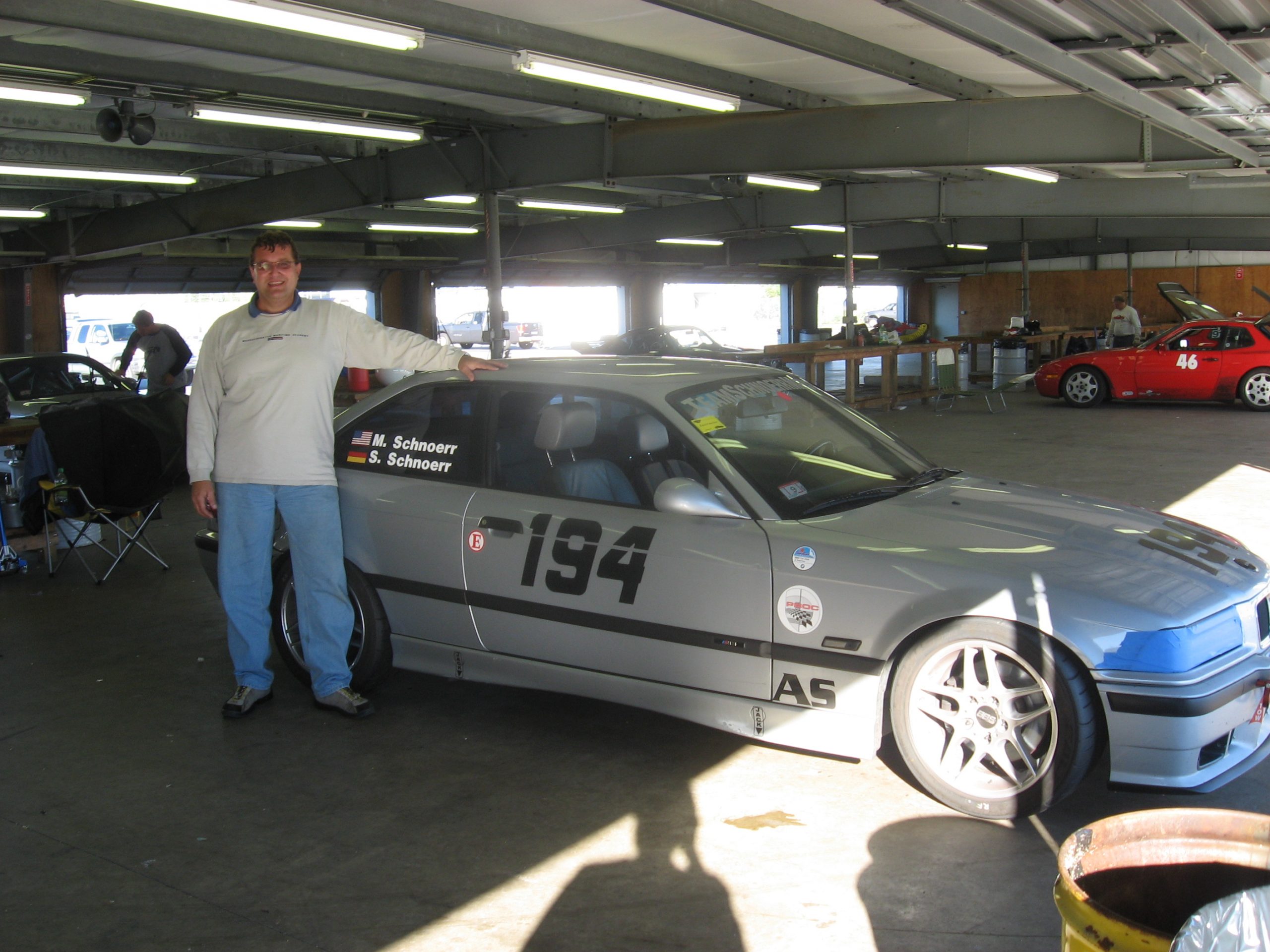
 

At first, I didn’t own a trackable Porsche but did an occasional DE in my BMW E34 sedan and recruited Mark to be my instructor. Despite its heft, the E34 handled remarkably well and was a 6-speed V-8. And Mark would not let me give a point-by to a Porsche – just pushed me to go faster. (Two days at Watkins Glen and I drove home with metal on metal brakes.)  Later, after I had my Cayman and was doing regular DEs Mark instructed my daughter and, for one magic day, my wife. Rosemary (her nom de guerre is Rosemario) was comfortable, if mid-pack, as an autocrosser. I talked her into a DE at NHMS, and afterward, she said, “no thanks – too fast.”  But she was going to be a spectator at a one-day DE at Lime Rock where I had arranged Mark to instruct my daughter. Nora wound up with a conflict and was a no-show. Mark, who can be very persuasive, talked Rosemary into taking her place. It poured rain all day. There was a river running across the No Name straight. While most everyone (probably including me) tip-toed around, Mark had Rosemary close to 115 on the main straight and 80 on No Name (“keep your foot down and the wheel straight”). She loved it. Signed up for Watkins Glen, Mark wasn’t there, she hated it, done. Oh well.

But in the “what goes around” mode I am now again in regular contact with Mark (who lives in Texas). The JB team now has an E36 which we are preparing for endurance racing, and Mark still has his similar E36, is a regular competitor in WRL endurance races and has been providing invaluable insight into how to set up our car.
The second DE tale centers on my daughter’s first DE, just days after her 18th birthday, in one of the first outings for the Cayman. Nora was, of course, a green student, and I was in yellow/blue. Also at the event were Steve Schindler and his son Dennis who was a couple of years older than Nora. Steve and Dennis, who were also in yellow/blue and green respectively, were sharing a Boxster. At some point, Nora asked me if the Schindler’s car was faster than ours. I reflected that our newer base Cayman was probably darn close to their older Boxster S and that Steve and I were doing about the same lap times (and boy, do I wish I could still say the same!). This was apparently taken to heart because when Dennis appeared in Nora’s mirror (easy to spot with the Vermont plate), and she was advised to give him a point-by, by her instructor, she declined.

Most instructors would have told her to drive into the pits, but this instructor (not Mark but one of the best!), knew his student and her car and let her continue. With attention half on the mirror, Nora didn’t get much farther before PSM saved her bacon; she came to her senses and let him by. Lesson well taught and duly learned. The event did no damage to the relationship with the Schindlers:  at a later Mt. Tremblant event, Steve’s wife Mary befriended Nora, and Nora left our B&B in favor of camping at the track with the Schindlers.

-Bill Seymour, Former NER President, current “DE Crier “

Many years ago the Porsche club in New England used to run time trials up in New Hampshire on the ice in the wintertime. A favorite spot was Newfound Lake in Bristol, NH. A course would be set out using as few pylons as possible and timing was done from a bob house (think fishing shack) with a large plastic window looking out over the course. It was one car at a time like an autocross, just colder and slower. Most folks just ran their winter beater with snow tires but all were welcome. After PCA national stopped providing insurance for the event, the Boston Chapter of the BMW Club stepped in and continued the winter fun. That went on for many years until lake access became a problem (too much building around the lake). There were always events in upstate NY and in Canada but that always seemed like too far to go for just a few runs. I think my phone heard me talking about ice racing because a Facebook alert popped up that highlighted the Sports Car Club of Vermont (SCCV) and their ice race schedule near Montpelier, VT. That’s only a 3 hour drive north and with an empty calendar it seemed like a good idea.  Besides, Pearl, the Audi RS4 had a new engine installed and could use some road  miles. The extra 200 hp boost wouldn’t be needed on the lake but the ride up would be fun.


I called my friend Jeff Leeds who had also spent some time on the ice years ago and he was up for it so we motored up on a Friday afternoon for a Saturday event. Finding a great steakhouse in Montpelier VT gave us another incentive to go. The Open Table app had found the J Morgan Steakhouse (I don’t know what happened to the P) and the food was terrific.  If we didn’t drive well at least we’d had a nice dinner. 

Registration was online at Motorsportreg.com which made the process very easy. Drivers meeting was at 9am with the first run to start at 10 am which gave us time for the free breakfast at the Comfort Inn. While we didn’t see any other drivers eating that were headed to the lake, there was a big crowd that came for the free food.


We had both packed pretty much all the warm clothes we owned as the forecast was for a cold sunny day. It had been cold in Boston most of the previous week so that was no surprise. What was a surprise was the morning temperature in VT. I went out to start the car and the reading in the car was 20 below zero. That car had never seen a number that low, nor had I,  and it was going to get lower.   Elmore Lake was about 30 miles north of the capital and we had to have been 10 miles out of town before the heater started to put out any serious heat. By that point the temperatures in some of the low spots had driven the gauge down to minus 27 degrees.


When we arrived at the site they were lining up in a nearby parking lot that looked out over the lake. To get onto the ice another waiver needed to be signed, something to relieve the local town of any liability if you and your car fell into the water. There wasn’t much chance of that happening as the drilled surface had already been measured at 18”, more than enough to support all of us. Everyone lined up for a low speed familiarization run and the cars were all lined up in a plowed pit area afterward. That gave us a chance to get out of the car and walk around to see the what was running that day.


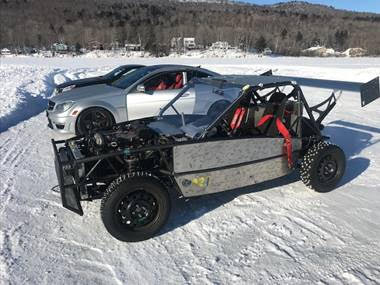
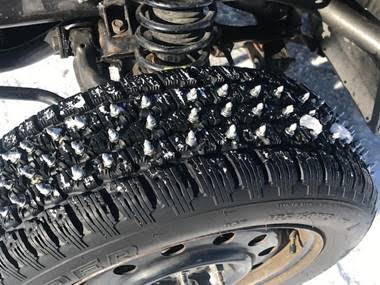
There were some real dedicated ice racers there with tire spikes so long they couldn’t be used on pavement. Fortunately they were in a Super Stud class which was even faster that the regular Studded Class. Pearl was just on a set of 5 year old Bridgestone Blizzacks without studs. Good on the street but a little old and hard to be really competitive in this kind of contest. Can you hear those slow time excuses yet?

 Since these drivers were mostly from VT and upstate New York, I’d say that most had studs of some type. After all, their roads stay snow covered for 5 or 6 months of the year.

The course and the parking/pit area were plowed out (see white truck above) which made the course easy to follow. There were only about 5 pylons on the entire course as nobody wanted to stand out there picking cones.  It was an easy course to see but not so easy to stay on if you were throwing your car around at maximum speed. The plow had  left a berm that was about 5” high but there were a few spots where it was deeper. Deep enough to high center a car that required a tow from the plow. High center means that the center of the car is  stuck on a mound of snow and ice and the wheels aren’t really touching the ground. No touch, no traction, studs or not, you’re stuck.

Jeff and I really didn’t want to be “that guy” so we were careful not to run off course. Of course that meant that we had to drive a little slower but it still seemed fast to us. See excuses, above.  Early in the day there was plenty of hard packed snow on top of the ice to get a decent grip. As the day wore on there were a few spots that were polished by spinning wheels that revealed black ice. Black ice is something you can’t stand up straight on, let alone drive on. The secret is a steady throttle and no sudden steering moves to allow the car to just roll over it. The key to a fast run is to find the white stuff and stay on it.


 Pearl made us proud and I even had a chance to use the loud button on the last run on the ice. I didn’t use it during the day because they had a 90db sound limit and after all that driving to get there I didn’t want to get tossed off the lake early . They loved it, like they say at the track: “we may not be fast but we’re loud”.  Oh wait, that was my High School Band and it was good, not fast.

 It was a great time, nice people, a well-run event and a mid class finish for us.  With darkness falling the event finished up early and we were on the road by 4. That left time for a nice dinner on the way home. A great car weekend in the middle of winter. What’s not to like? Well, maybe it might be closer to zero next time, we could spend more time out of the car.

As a reward for great service Pearl got a new outfit for Spring using my shelf paper method. For old timers, that’s a Datsun stripe, my thanks to Bob Sharp.

Tom Tate RS4 PCA NER


Can summer be far away?

-KTF

Seven years ago when I moved back to Massachusetts from the D.C. area and switched my PCA membership to the New England Region, I never anticipated what the following seven years would entail. I made it to a few auto-x’s, attended loads of cars and coffees, started doing DE, served on the NER board as Treasurer, then VP Admin and now as the new President. Through all of that fun car stuff though, the best part has been the people I have met. People who have helped answer questions about my different board roles, instructors who answered questions/ offered tips and critiques about my driving and car set up, the few hardy souls who have ridden shotgun in my car at DE events, they have all proven true the mantra “it’s not the cars, it’s the people”.

As we move steadily into 2022 and closer to the “driving months” and as the various lingering elements of the pandemic hopefully retreat into our rearview mirrors, I am eagerly looking forward to where we go as a club.  Both in terms of “recovering” from how we have had to do things for the last two years and also how we can improve or expand the club in general.  PCA is an ever growing and increasingly diverse group of people and cars. One of the big ongoing questions the NER board faces is how do we keep our activities relevant to this evolving environment? We need to constantly be thinking about this along with a host of other items surrounding our existing club needs.  The board is comprised of a great group of people who I know will do an exceptional job, but at the end of the day we are finite and fallible human beings. Every club member should feel 100% welcome at any time to offer suggestions, recommendations, etc regarding the club. It is an open line between you and the board.  The more communication and feedback we receive the better we can do our jobs. 

Here is to having an excellent 2022!

-Robert Jacobsen, NER President

What’s your name and where do you reside?

Stan Corbett, My wife, Carie, and I live in N.Grafton

What’s your first Porsche experience ?

While still in the service, in Omaha NE, Stan was in a Hemi Club and had a 426 Road Runner.

“…We would run gymkhanas and one guy brought a 911, which I thought was cool, until I met the wrong group of 911 owners who had their nose in the stratosphere. I wrote them off until I had a friend who had a Boxster and we went up to NHMS a couple times. We went to Mosport and while we were up there, I did a bunch of parade laps each day. On the way back I said, This is too much fun not to be involved in. So I called him later that day and I had my Cayman at the end of that week… I put it on the track later that month at NHMS. I traded in my Dakota and the Cayman was my daily driver for 2.5 years. I bought a set of rims with Blizzaks and that’s what I drove in the winter.” From that moment, Stan has done almost every NER and NCR DE event every year and got 25-30 days per year since then.

What’s your history with PCA and New England?

“Since I bought it (the Cayman) I have been in PCA. I flagged at NHMS and worked control at Mosport before I joined because I was with my friend (the Boxster owner). Steve Artick let me in my first event (at NHMS) and was my instructor. I was going to the track so much my wife let me get a tire trailer and then an open trailer and tow vehicle. For several years I towed it with a Dodge pickup which I traded for an 06 Cayenne S. It had headlight issues and I swapped it for a 09 Cayenne S… I was picking up parts from the folks I bought it from and they had a 2013 Cayenne Diesel. The owner showed it to me (I knew it would tow better) and then he said “I’ll sell you that one.” “SOLD”…when not towing I get over 30MPG.” 

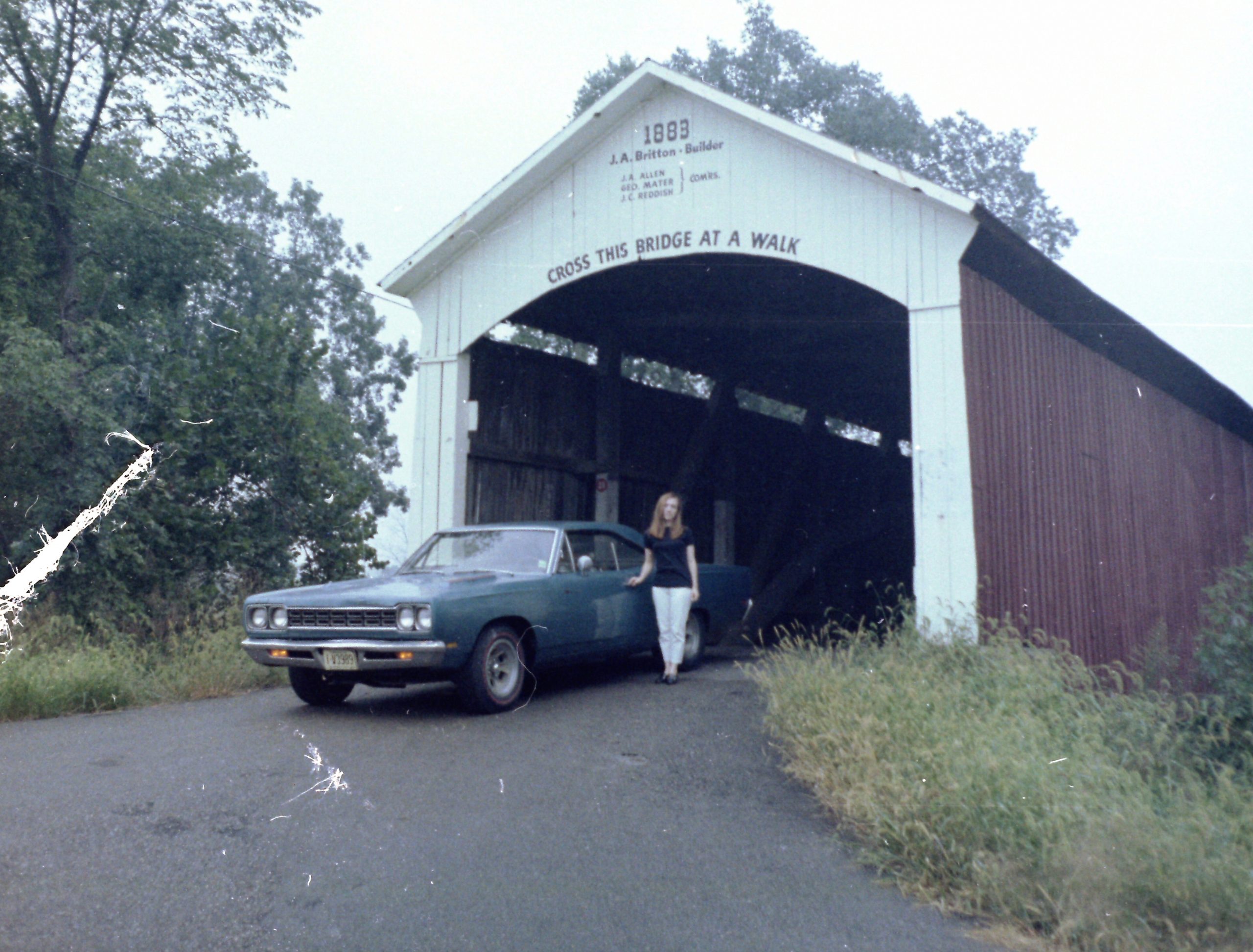
I used to drag race a 69 Hemi Roadrunner in Nebraska and if it wasn’t for my buddy with the Boxster, I would have never bought a Porsche.”

Winter driving:

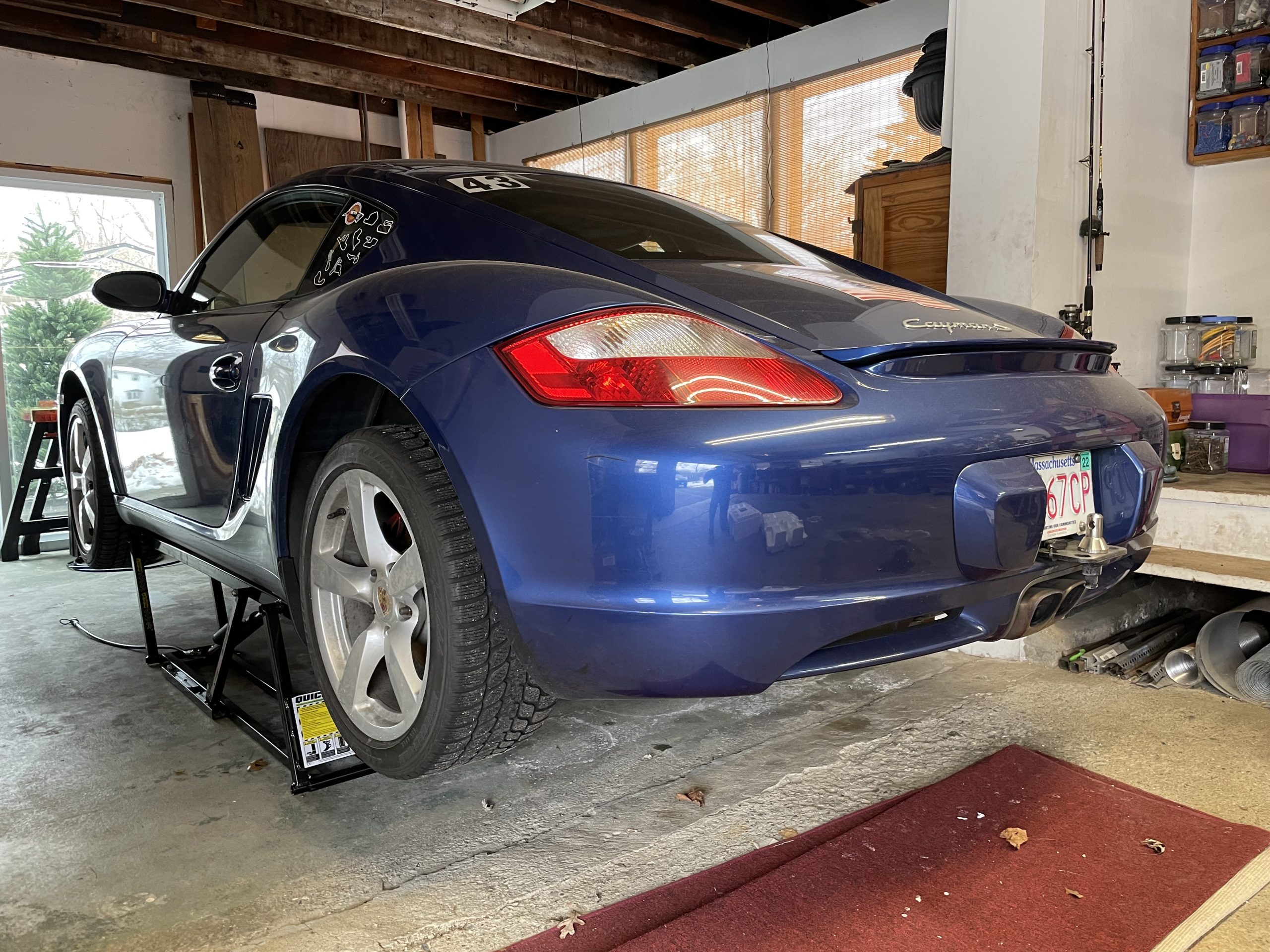
“The Cayenne is my daily driver. The Cayman is on quick jacks. At the last Palmer event, 3rd gear took a vacation, the rev counter climbed and now it’s broken. The transmission will come out, Kevin Gross will pull it apart and see what’s going on (Kevin is a NER and Zone 1 Instructor)”

Favorite and least favorite parts of winter? 

Favorite: “It used to be sticky snow so you could make snowballs and snowmen, but not so wet you couldn’t ski. I gave up downhill skiing a long time ago but then did cross country for a few years.”

Least Favorite: “Slush”

What are the best and worst cars you’ve driven in the snow?

Best: Cayenne

Worst: Hemi with slicks in Nebraska. If you went up a hill you had to time it….(YIKES)

Any words of encouragement for members who don’t drive their Porsches in the winter? 

“I drove the Cayman as a Daily for 2.5-3 years. Buy a set of honest to goodness snow tires and exercise a reasonable amount of common sense.” – Words to live by. Listen to Stan, and enjoy your Winter, folks!

If you would like to share your Porsche winter driving experience with our NER crew, please email Luis at [email protected] !

Thank you Stan!


by Tom Tate

I have never been big on reading instructions. I always thought that instructions were something that you looked at if you got stuck when putting something together. If the picture on the box wasn’t enough to assemble the legs on a new stool or wheels on a cart then the instruction book was the fall back guide.

 I figured that written instructions were a modern device that lawyers wrote up with lots of disclaimers  to reduce the liability of the manufacturer.  Ladders always came with stickers all over them telling you how to unfold it, where to step, and how high you could go. Check any step ladder at the hardware store, they have a minimum of 8 stickers.  How about the instructions on the plastic bags from the cleaners? Does anyone really believe that the store sends you home with a toy along with your clean clothes? Really ? I know that it’s not a toy, they don’t have to print that on the bag 27 times.

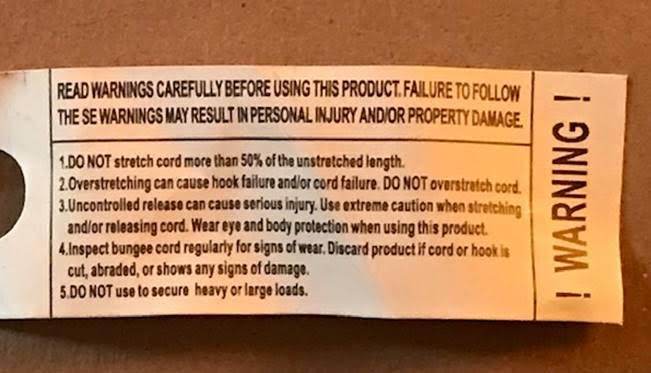
A handy gift that I got for Christmas last year was a handful of bungee cords. I have a bunch hanging in the garage, many are old and limp but I keep them around just in case. Some are from what we used to call the “supermarket of the highway” which is anything found on the side of the road. To this day I’ll pull over if I spot a discarded tool or hold down strap if it looks decent. The bright red bungee cords came in a nice clear plastic tube and had instructions attached. The instructions were actually warnings, a little list to keep them out of Court. The warnings made them sound like they would be dangerous to have around the house. It talked about personal injury and /or property damage.

The first thing it said was “DO NOT stretch the cord more than 50%”. That’s not even tight. We always doubled their length or else it wasn’t tight. The second line said the same thing but warned of hook or cord failure. Then a line about “uncontrolled release”. That’s when it snaps back and hits you in the back of your hand or in the face if you’re up too close. Been there, done that, don’t need to relive that. Line 4 says inspect regularly and discard if worn. What? Throw out a bungee cord? No chance, if it breaks just cut off the end, put it back through the hook, tie a knot back on, and it will be tighter next time. Last line: don’t use for heavy or large loads. If it wasn’t a large load I wouldn’t need a bungee cord. Who writes this stuff? Have they even used a bungee cord? I don’t think so.

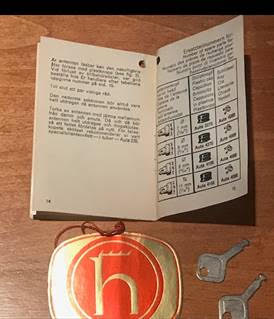
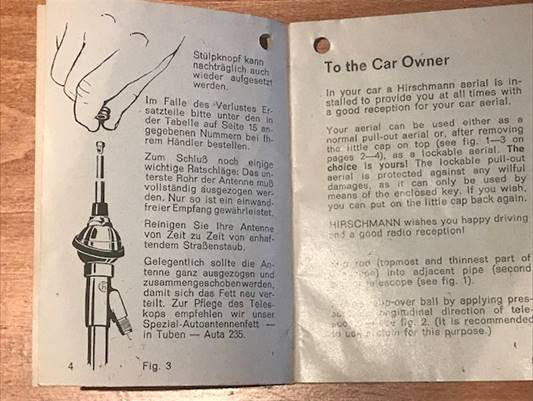
 Instructions like the above have been around longer than you think. I was going through some old files of Porsche literature and came across an instruction booklet that came with cars that were equipped with Hirschmann radio antennas. Tied to the booklet with a red string were two antenna keys since these early manual units could be locked down for safety.

The booklet was 8 pages, written in three languages, with many drawings showing exactly how it worked. With the plastic cap in place it could be compressed into the fender and then pulled up without the need for a key. In fairness, this was the ‘50’s and I would say this device was at the cutting edge of technology.

 If the owner was someone who wore suspenders and a belt and wanted to be safe when the car was parked, the plastic cap could be removed and the antenna pushed all the way down into the base and locked in place. Only the small key could catch the inside of the parked tip and pull it back into service. That was high tech in 1955.

 Simple instructions like those above got me thinking about the instructions that were given to new Porsche owners back in the ‘50’s as compared to todays new cars.

The owners manual from the 356 days was  96 pages and included a lengthy section on care and maintenance. The maintenance section explained how to change a tire, adjust carburetors, change a fan belt and do an oil and filter service. Brake and clutch adjustments were described in great detail along with many photos.  The manual was so complete that for many mechanics it was the only repair book that they needed.


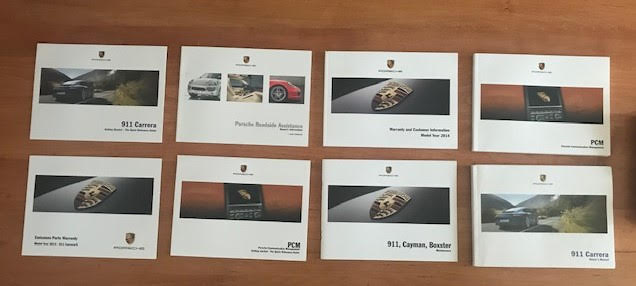
Todays new cars are so full of technology  that the books that come with them all but fill what we used to call the glove compartment.  BTW, it’s now a Glove Box according to page 190 and there is a WARNING that says “An open glove box may cause injury during an accident. Keep the glove box closed while driving”.  

The owners books, I don’t think it’s fair to call them manuals, also include a PCM (Porsche Communication Management), a warranty book, and a maintenance book. The owners book looks familiar as it shows pictures of the dashboard, seat controls, things like that. It also has a section on settings, not unlike your phone. Do you want the outside mirrors to fold in when you lock the car? Do you want the seat to move back when you get out of the car to make your exit more graceful? What would you like to show up on the multi function display? G forces? Tire pressure ? Navigation? Map?  Engine / oil temps?  The choices seem endless.

The PCM is a descendant of the 4 page radio manual  that Blaupunkt used to include with their stereos back in the day. Now it includes forty pages on just the phone and accepting Bluetooth. Maps is in there somewhere with Navigation and takes up another 20 pages. It’s no wonder that people don’t read these books, besides there is a Quick Reference Guide for both the PCM and Owners Manual that is a fold out with only 9 pages each that will get the music on and the car moving.

There is a Warranty book that is waiting for the Dealer service stamps and maintenance records but it’s only 27 pages and easy to miss. Another labeled “Warranty Book and Customer Information” is bigger and has things like towing instructions and a notice from the state of CA that talks about arbitration and why you go there if you’re not a happy owner (not exactly in those words). Below are the totals:

                                                                                   2015   Porsche Macan S                            2015 Porsche Turbo S      
                      Owners Manual                                         352                                                                298
                      PCM                                                           200                                                                200
                      Warranty Book                                           84                                                                  84  
                      Maintenance Book                                      27                                                                27
                      Quick Start PCM                                          9                                                                  9  
                      Quick Start OM                                            9                                                                   9
                      Roadside Assistance folder                          7                                                                   7   
                      Emissions Parts Warranty                            4                                                                    4
                                                                                            ——-                                                             ——-   
                               Total                                                    692  pages                                                   638 pages


I don’t suppose that I need tell my readers that there are no sections on how to do any kind of maintenance on modern cars. Since there is no spare tire or jack you’re not going to be changing any flat tires on the side of the road but there is a page on how to use the tire sealant that is in the right hand box in the luggage compartment. Instruction number 7 is to get all passengers out of the vehicle. What ? That was when I stopped reading. I know that modern cars are a lot more complicated in 2022 than they were in 1958 (the year Blackie was built) but really, over 600 pages? Most of which are pages filled with red blocks labeled WARNING. See above.

 I believe that my original method of reading the instructions when I get into trouble has worked pretty well all these years so I will stay on that path. That and continuing to drive old cars every chance I get will keep a smile on my face.

 KTF  

Most of my teen years were spent in Tanzania from 1963 to 1966, from age 14 to 18. As with all teens, these were transformational years for me, and what a great place to spend them. Tanzania had just gained independence. Actually, it was Tanganyika when we moved there; Zanzibar rebelled against their Arab rulers in 1964 and subsequently merged with Tanganyika and was renamed Tanzania.

My family moved there from Denmark because my father had taken a job with the Danish foreign aid agency, which was building a high school in Kibaha, about 25 miles from the capital, Dar-es-Salaam, in cooperation with Sweden, Norway, and Finland. The first year we lived in the Central Highlands in Iringa at a boarding school built by the British, called St. Michael’s and St. George’s School when we arrived, but quickly renamed Mkwawa High School after a chief who in the very late 1800s rebelled against their German colonialists. The rebellion failed, mainly because the magic potion, water, failed to protect the warriors against German bullets, and poor Mkwawa’s skull was kept in Berlin until it very recently was returned to his homeland. The school entirely transformed over the next two years from being extremely British: almost exclusively white students and teachers, and teachers wearing gowns and mortarboards daily, to still an almost exclusively white teacher body, but the student body being almost exclusively native Tanzanian.

At the end of the first two years, the rest of my family moved to Kibaha, 300 miles away. But I stayed on for a term as a boarder because the Scandinavian-built school in Kibaha wasn’t ready to accept students. Kids either really enjoy boarding school or hate it. I loved it. My younger brother went to a different boarding school in Nairobi, Kenya, and hated it. The only thing I wasn’t happy with was that as a white person and the son of a former teacher, the staff went to great lengths to not show any favoritism towards me, on the contrary.

Well, I digress and better start writing about cars. While I was a boarder in Iringa, I turned 16, the age at which I could get my driver’s license. I was able to talk the headmaster’s wife into letting me drive her car, a VW Beetle,  around the school grounds, with a big L sign on it. After a couple of weeks, my birthday came up, and since I was now confident in my driving skills, all done at 20 to 30 MPH, to make an appointment for my driving test on my actual birthday. For some reason, the headmaster’s wife’s Beetle wasn’t available, so I had to borrow another teacher’s car, fortunately also a Beetle. Driving tests were conducted by the police, and after I paid the fee, 5 shillings, approximately 80 cents in the US, a cop joined me in the passenger seat, had me drive around the block, and then parallel park. I passed!

To my surprise, the paperwork given to me authorized me to operate any land-based vehicle with wheels, including motorcycles, cars, trucks, and buses. I chose to have the actual license issued for motorcycles and cars. Much to my later regret, but because the truck and bus license required a picture, which I didn’t have. I could, however, use the original paperwork to upgrade my license later, which I didn’t, to my even greater regret.

My parents were blissfully unaware of my shenanigans, and when the term ended and I rejoined my family in Kibaha, I showed my license to them and asked if I could borrow the family car. To my huge surprise, my dad pulled out the keys, handed them to me, and said, “here!”

That 80 cent license got me a Danish driver’s license for almost nothing, and that, in turn, got me a US driver’s license for almost nothing! I did, however, have to take the written test, which the Danes hadn’t required.

The pictures are of my family taking a lunch break under a Baobab tree on one of our many vacation trips (I am the tallest kid), and of the lowest grade of road that we encountered!

I challenge all of you to write a better story about getting your driver’s license. To accept the challenge, write it up in a Word document and send it to [email protected]!

-Anker Berg Sonne

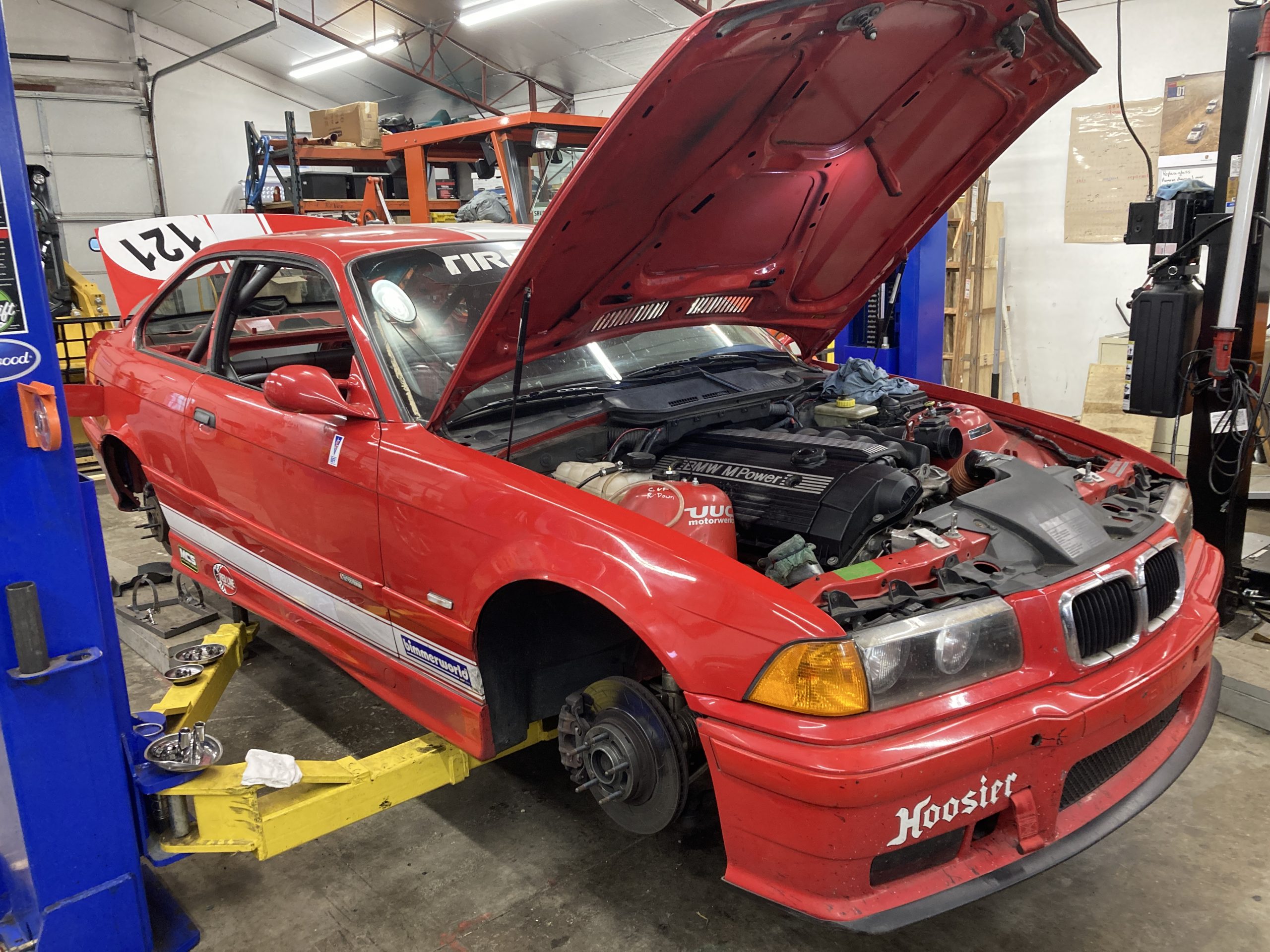
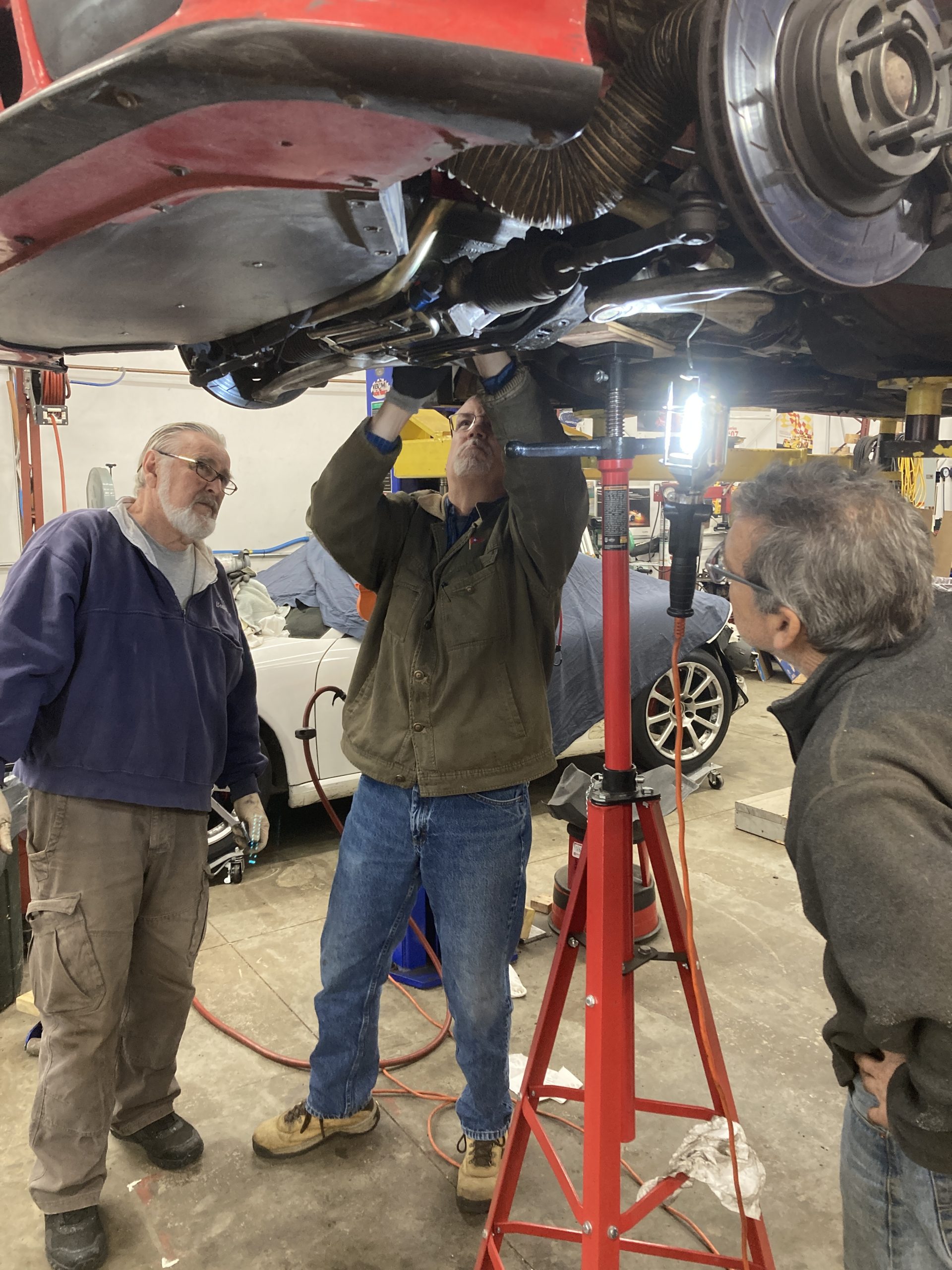
With the Mustang a no-go for the series we want to race in (American Endurance Racing and Champ Car), the Jamaican Bakin’ team bought an E36 BMW M3 race car as a replacement. The car was a successful BMW Club racer that was built out with the correct aftermarket parts. We took it out to the last Thompson member day for a trial, and it worked great – easy to drive, ran fine, good to go, nothing needed before next season, right? Well, no. Of course, there are a few things that need to be done – perhaps a day or two of work?

Let’s start with the obvious. To run successfully, we need to be able to go 90 minutes between stops. The stock fuel tank holds 17 gallons (perhaps 16 useful before it starves on corners) – not quite enough. So a pony tank will need to be installed in the spare tire wheel well. With a fuel pump to pump from the pony to the stock tank. With wiring, switches, etc. And while we are at it, we might as well replace the fuel lines, just to be safe. But with a pony tank in the trunk area, we now need to fabricate a firewall to separate that from the driver compartment.

We also need to move over the endurance racing stuff from the Mustang to the new ride. The cool-suit system and the telemetry system (don’t forget the antenna mounting) require some brackets to be fabricated and a fuse box added to deal with the additional electrical demands. Oh, and since we are messing with wires, we might as well take out some of the unnecessary original wiring and clean that up. Oh, and don’t forget the rain light (noting that AER mandates one type and Champ Car requires a different one.) Or the flagging system device and its wiring.

We were all reasonably comfortable doing short stints when we had the car at Thompson, but for long stints, the seating position wasn’t great for all of us. So we need a new seat which will require fabricating new brackets for the slider and the back brace. (Poor Chip is the one with the machine shop and thus gets more than his share of assignments.) And the steering wheel angle and location suited the previous owner but not us, so a little work to move the wheel down and away from the driver. Piece of cake! Plus, the mirror is too far back and needs to be moved.

The belts that came with the car are OK and have another year left, but the ones in the Mustang are better, so let’s swap those out. And, yes, there is a center net, but we don’t like the way it is fastened, so that will require some work. And the door net is a bit weird, so it will require some attention. While we are at it, for safety sake, let’s replace the original interior door handles with cables that are easier to find and pull in an emergency. Finally, on the safety side, the fire system is out of date and needs to be refreshed.

Oh, yeah. As an endurance car, we need to add a differential cooler (which needs to be powered plus a temperature sensor added – see wiring comments above), and it needs a NACA duct to draw in air. The easy solution is to replace the rear windows with Lexan and put in the duct – it lightens the car too! – and we need another duct to bring in cool air for the cool system anyway! And don’t forget that we need to do something to defrost the windshield since we might be doing long stints in bad weather.

While the car came to us as described, there were a couple of small problems. There was a crack in the windshield and a battery tie-down that would not get past an AER tech (but apparently got past BMW club racing). But, hey, we need a lighter battery anyway, so Chip has one more thing to fabricate. And there is a slight tear in the left ball joint boot. Now that we think about that, maybe there is a suspension upgrade that would require new front control arms anyway – we’ll look into that. And the clutch works fine but takes up very close to the floor. It would be more aesthetic with a higher catch point. And anyway, we should flush the system. Never mind, let’s just preemptively replace the clutch slave cylinder – it’s probably pretty old.

Let’s move on to the wear parts that could fail. Might as well do those now rather than just stockpile parts and wait for something bad to happen at a race! (Since I’m a lousy wrench, I get assigned to source the parts – made harder by my lack of knowledge, age of the car, and uncertainty of which are stock and which race aftermarket.) I’m looking at your bearings and half shafts! And perhaps the solid motor and transmission mounts are too stiff for the wear and tear of endurance racing? Let’s research and debate whether to go with OEM or poly. OK, poly it is.

OK, now we are almost ready to go racing. My final job (note the skill involved) is to remove the old number panels, work hours with acetone to get all the glue off, and then put on the shiny new “420” number panels and Jamaican Bakin’ Racing decals. Vroom. Vroom. Let’s hope we are ready.

P.S. One nice benefit of working on the E36 is that we have been reaching out to old NER friend Mark Schnoerr for advice. He and Sigrid send their regards from Texas.

-Bill Seymour

This past Wednesday was my last meeting in my current tenure. I became a member of the board four years ago, very shortly after I joined the PCA, and now, after three years as Membership Chair and one year as VP of Communications, and for the majority of the time, NOR’EASTER editor and the person responsible for getting a stream of content (articles, columns, event promotions, event reports, new member welcomes, and recognition of anniversaries) to the membership.  I have run into the term limit set in the bylaws. I am all in favor of term limits and four years feel about right; I need a break. It has been a great experience, and I have made a lot of new friends at an age where the circle of friends normally shrinks. PCA activities at all levels, Regional in NER, Zone level in Zone 1, and at the National level have filled my calendar and enrichened my life.

I am proud to have been heavily involved in evolving NER, which we have to if we want to remain viable in this world of constantly accelerating change. We reintroduced Rallying, which has proven to be a popular re-addition to our portfolio, Sim Racing has expanded explosively in the last two years, and Cars & Coffee events have become much more frequent and popular.

The bottom line, Porsches and the PCA have become a big and rewarding part of my life.

Now it is my turn to focus on participation in the events I enjoy, which pretty much includes the entire range. I’ll continue to commit time to run the club: I will still be responsible for the gathering of content to be communicated, I am a member of the Autocross committee, I am a Zone coordinator for Zone 1 Sim Racing, I am on the Rally committee, and willing to jump in and lend a hand where a volunteer is needed.

If you enjoy making a difference, getting to know people, and being a member of a team, I recommend you follow the same path! Join the board or become a member of one of our many activity teams.

Recently I had another lucky and life-changing experience. 

Several years ago, while I was NOR’EASTER editor, Bill Seymour secured permission to reprint the contents of a couple of Ross Bentley’s Speed Secrets emails. I suspect many of you know who Ross Bentley is. Race driver, racing coach, and author of the Speeds Secrets series of instructional racing books. 

Ross is also a person who is a complete joy to get to know. I wrote him a few emails over the years commenting on his Speeds Secrets emails. Ross replied to every one of them and obviously spent some time considering what I had written. As I became more and more involved in sim racing, my emails were mostly about the connection between “real” racing and sim racing, both similarities and differences. I also commented that it would be fantastic if he could expand his focus into this realm.

Out of the blue, a couple of months ago, Ross emailed me and asked me if I was willing to join a group of beta testers for a new service, Sim Racer Academy. The service is broken into two parts. One is a website containing a wealth of self-paced instructional material about all aspects of racing, the other a Discord-based forum providing a social platform for the service. I accepted immediately, and in the course of our communications, he mentioned that he was looking for a few individuals to help him run the service. I responded, “Me! Me! Please, Me!”.

I have taken responsibility for the day-to-day operations of the Discord service and joined Ron Gale, who will be running practice and race sessions, Conor Murphy, who is the Sim Racing technology expert, and of course, Ross. We work as a closely-knit team, communicating on a daily basis electronically because we are spread over the US and Canada.

The service has been well received, and we are all really busy. Busy enough that I have needed to cut back on some of my other activities. Being part of building something new, figuring out how to make it succeed, and interacting with the users is just up my alley!

Now we have to get rid of this COVID thing!

On that joyous note, I wish all of you Happy Holidays. See you in the new year on the track, at the C&C, at the Gala, the Rallies, and all the other places we NERs have fun together!


Written by: Anker Berg Sonne