Archive for category: Monthly Columns

 ( note  – This article contains a number of links that will take you away from the NER website.  Please read the whole article and THEN click on the links to proceed down the rabbit hole to the Internet! )    

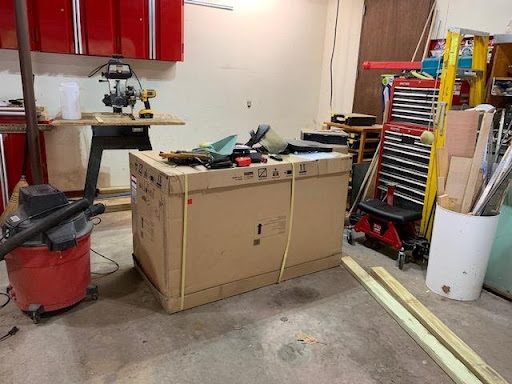
For the past 30 years, my Garage has been a Hodge-podge of home-built workbenches, recycled filing cabinets, and mismatched overstuffed toolboxes.  All piled together along the back wall of my two-car garage.  Every project would start with a search for the proper tools, or at least for something that would more or less accomplish what was needed.   I had a workbench, but most of the time, it was buried under a pile of pieces and parts leftover from old projects or the beginning of the next one. 

Just so we are clear – here’s a picture.   

So when the Covid Lockdown caused everything to come to a screeching halt, it was the perfect opportunity to completely redo the Garage.    

Research and Design Considerations 

I had a rough idea of what I wanted to do and how the result should look, but since this was a project that I only wanted to do once and it was probably going to be somewhat spendy,  I needed to do some basic research first to understand what is available.   Over the past few years, I’ve been collecting information and catalogs from all the various manufactures. I’ve been inside a number of well-equipped shops and dealerships. We’ve even been treated to the full tour of the Team Pensky  Porsche Spyder Race Car Transporter.   So I have a good idea of what’s possible and what constitutes the “State of the Art.” I’m sure you’ve also seen the ads for Baldhead Cabinets systems in Pano.     And if you’ve been paying attention to YouTube, I’m sure you’ve seen the various garage makeover videos.   The range goes from Gladiator cabinets in polyvinyl available at Wallmart  and the steel ones  at  Home Depot and Lowes all the way up to Lista Aluminum cabinets that you find in the race car transporters for Teams like Penske  ( who, in honor of Mark Donahue, have their cabinets made of unobtainium ).  

If you are not familiar with Lista, here’s a link to LISTA Modular Cabinets – ListaCabinets.com

Or you can explore the options at the very Porsche Centric  – Baldhead     Welcome – Baldhead Cabinets 

Here’s another Option  –   Moduline    PROII™ Custom Garage & Shop Cabinets Aluminum Storage (modulinecabinets.com)

Or, if you have an even bigger budget and a tendency toward OCD,  you might want to consider the options promoted by the Youtube Channel   Obsessed Garage.  —  Sonic Cabinets, which come complete with sets of tools all laid out in foam drawer inserts.    Individual (sonictoolsusa.com)    But now we are detouring off into tool chests,  and not really Garage  Cabinet systems.    
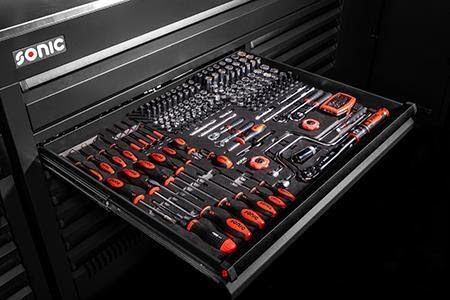
Foam Inserts are a really nice way to organize your tools, and you will always know what’s missing.  But they are also available separately, so you do not need to do all the drawers in foam or go the Full Sonic replacement route.

Or you can do your own foam system.  Here’s a video on the Kaizen Foam.    Or this system by Shadow foam. 

So …  since I’m not operating at  Penske  Budget levels,  and it’s not me that gets cars delivered on my street by the Porsche Motorsports truck, as shown below.   ( and it’s not neighbor NER Track Chair, Adam Swartz either ) 

Let’s get more realistic.    I wound up focusing on three systems.    My target budget was more like under $ 3,000  and not the  $ 40,000 that some YouTube installations are promoting.        

The first step of my investigation started with New Age ProductsGarage Storage Cabinets | Pro Series | NewAge Products (US)    You may know their ads from Costco and others.   They sell pre-configured groups of cabinets in various colors and combinations.   They come in 2 basic levels of steel gages,  and you get what you pay for.   Buy the cheaper versions at your peril.  They also have a free design service that will help you find the combination of cabinets that works best for you.   Here’s a video of “Tavarish” Unboxing and installing a set from New Age in his early Florida home Garage.  Making My Garage Awesome Pt 1 – YouTube.   It was this video that first got me thinking about a Garage Makeover.   – How hard could it be??? 

Next is Harbor Freight’s  US General line.       Harbor freight is well known for their cheaper imported questionable quality tools.   Their cabinets and tool chests, however,  are medium quality and certainly suitable for Home use.  

And finally, Home Depot’s line of Husky cabinets,    Lowes also carries a line of Cabinets as well and sells the Craftsman line,  now that Sears is gone.      

Pay attention to all the details when deciding what line to pursue.    Consider the “gauge” of the metal used for the cabinets; the commercial-grade cabinets use a heavier gauge, the most expensive use Aluminum,  for cabinets intended for Trailers and Transporters.    But for home use,  I’m not sure it’s worth the extra cost.    Double-check the drawer slides.  Are they really full extension?   Does the back of the drawer fully clear the face of the cabinet?  Do the deeper drawers have two slides per side?  How much weight can they support?  A drawer densely packed full of sockets is actually remarkably heavy.     Also, I completely ignored the cabinets made from Melinte and plastic.  How are you going to handle all those boxes of small hardware?   Nuts and bolts/drywall screws,  50 different sizes of whatever.  Two trays of your collection of different size Porsche small hardware were collected over the years.  And a place to store all those Porsche Special Purpose Tools that you only use for doing that one job on the Porsche model that you no longer own.

The next consideration is the mix of types of cabinets; how many cabinets with shelves and how many cabinets with drawers, and do you want any full height tall wardrobe type cabinets.     You’ll need a mix of all types.   For my solution. I went with all double door wall cabinets for the upper cabinets across the back wall.   I had room for two wardrobe-type cabinets on the Garage sidewalls.     As for the base cabinets, for my needs, I discovered you can’t have too many drawers.   More is better — with plenty of shallow depth drawers.    Different widths help as well.  Do the drawers have a latching mechanism or are they soft closing?   The object is to complexly fill each drawer with one layer of one type of tool.   One draw for metric sockets,  one drawer for SEA combo wrenches,  One drawer for plyers,   one for drivers,   A deep drawer for all your Battery-powered DeWalt toys   — you get the idea.  No more sorting through a pile of open-end wrenches for the correct size.    I counted the drawers, and I wound up with 41.       

Next, consider the drawer slides. Make sure the drawers open all the way out; some cheaper cabinets do not.      Also, the more robust cabinets have multiple slides for the lower, deeper drawers.  Also, check the horizontal depth of the drawers.   Some of the cheaper brands don’t have the cabinet depth that others do.    If your countertop is 26 inches,  you don’t want 14-inch drawers beneath.   A full-size drawer should roughly be the same size as your countertop.        

And lastly, what color?   Black?  —    No, my Garage is dark enough – as it is.    Gray?  Nope.  Blue? Nope     Red!!!          

Layout 

Start with a clean slate.  A blank wall.  Decide how much countertop you need?  Then fill in cabinets from there.    The object should be to fill the available space.   Your particular combination will be different.    

Don’t forget to look for design problems and special considerations.   In my case, there were three.   I have a support column that needs to be considered in the center of the Garage that is 30 inches from the back wall.  I also need to accommodate a place for my air compressor and also my radial arm Saw. My design needed to make sure the column would not interfere with opening Cabinet doors or drawers.  I also put the air compressor at one end all the way in the corner,  and I discovered I could eliminate the large feet that formed the base of the saw and build a new base that matched the cabinets along with custom bending some sheet metal,  painted to match the Cabinets.    It turns out Rustoleum Cherry Red is a remarkably close Red.      

So ….what did I order ??        

I wound up focusing on the Huskey line as I felt it gave me the best bang for my Dollars. I wanted to Maximize my countertop space, so my design was pretty straight forward  1 Long continuous countertop with Wall Cabinets across the top and a combination of lower cabinets.   And I happened to be able to put two wardrobe style recycled used office cabinets on both sidewalls.  I ordered 5 of the wall Cabinets to start.    

Unboxing and assembly 

Having watched enough YouTube on garage cabinets, I knew that the wall Cabinets would arrive packaged as a collection of flat panels that would need to be assembled.    Husky 29” X29” Wall Cabinet Assembly – YouTube 

The first one took an hour to assemble, and by the time I did the last one, I had it down to 15 minutes. The wall cabinets hang on a bar that goes across the back of the cabinets.  Make sure you have located and marked all the wall Studs so that the bar is secure and level. Once the mounting bar is in place, placing the cabinets is a matter of making sure all the corners align and the doors are straight before securing them to each other.    

The lower cabinets are an entirely different matter.   Since all of my lower cabinets have drawers, they all came preassembled (or at least mostly assembled); this means they are big and heavy.   And in order to make the total width measurements of the cabinets work out to the same as the width of the wall space,  I wound up with Husky Cabinets combined with my old Sears Craftsman Rolling tool chest and one tool chest from Harbor freight.   Since I had chosen Red as my cabinet color, I verified that the three different manufacturers all used a very similar red color.   (at least for me, it all looks the same  — but then I’m red-green color deficient) .    Be aware that if you order from different providers, their colors might not be exactly the same.  
Dimensions      

There are a few key dimensions that you need to set early on in the design.   Start with the workbench surface elevation.   Just how high off the floor do you want the surface of your workbench?   You have some options.   This choice may even influence the choice of a cabinet manufacturer.   There is no standard.   And if you mix brands, you will need to have a means of adjusting the heights.   Do you want wheels on your base cabinets?   Some people want the ability to move their tool chests, but I intend to have a single contiguous workbench, and I don’t want the empty space under the cabinets that collect all sorts of dirt and small parts that need to be cleaned.  My intention is to remove the wheels, and the cabinets will live on a Pressure Treated wood frame that will form the “Toe Kick.”    

Once the countertop height is established, we can determine the bottom of the Wall Cabinets.  You need to have room to clear whatever might live on the workbench and yet still easily reach the bottom and middle shelves of the Wall cabinets.  All of these dimensions are a matter of personal preference, and there doesn’t appear to be a universal standard.   Getting them wrong, however, will be a source of annoyance for a long time.     

Then there is the question of drawer sizes; you need an adequate mix of drawers of various widths, including at least one drawer that is extra wide. I have one drawer that is  48 inches wide to store some tools that are extra long.    Some are 30 inches wide, and some are 16 inches wide.   Some drawers are 2 inches deep, so only a single layer of items fits in them.   

Some are 3 or 4 inches deep, and a few at the bottom are 10 and 12 inches deep for the larger battery-powered tools.     

The more drawers, the better …   and with so many drawers, it really helps to Label the drawers and cabinets.    Maybe if I were 25 again, I could remember where everything is.  Now  –  not so much.    

Lighting; 

Garage lighting is notoriously bad.   Typically a garage has one or two 60 watt bulbs in the center of the ceiling supplemented by the 40-watt bulb in the garage door opener.    In the past, people would add a few fluorescent “shop lights,” and it would be somewhat better.      Based on how often they seemed to need replacement, I expect that they were adversely impacted by the frequent extreme temperature fluctuations found in a home garage environment.     But now, you can replace those 60-watt bulbs with LED Fixtures that will flood your Garage with light.     It makes a tremendous difference both in the number of lumens available and the power consumed, plus LEDs are now available in  higher color temperatures that more closely  resemble daylight than incandescent bulbs     

Bench Top:     

Again there are the default choices; most base cabinets come with some sort of surface to be used as a Bench surface.  You can go with a vinyl mat, some sort of faux wood laminate surface, or stainless steel.  But I wanted one continuous surface that spanned over all the lower cabinets.   With a mix of different base cabinets, some with raised edges,  some with laminate, I needed to build my own.    So with all the base cabinets in place, my first impulse was some pieces of maple all glued together,  but that seemed like a lot of effort and expense for a top that was just going to get dented, scraped, and stained over time. The final choice was ¾ inch Pressed Particle Board Cut to size so it could occasionally be replaced when the surface became too marred or stained over time.       

Power:    

I added some power strips to the space between the upper wall cabinets and the benchtop. Plus, I need to add a reel-mounted electric power cord drop that matches my air hose reel.   

Backsplash: 

Some people like to use pegboards as backsplashes behind their workbench. Then they hang all sorts of frequently used tools on the pegboard, but following my design of as clean as possible, I have just a plain painted wall.     

Hardware storage:   

If you are like me, I have a large collection of miscellaneous hardware built up over the years of homeownership. Or maybe it was the old Yankee farmer in me being taught not to throw anything away that was potentially useful. It was collected in jars and boxes and those strange boxes full of little drawers that sat on top of your workbench taking up space, odd sizes of screws, nails, more recently,  partial boxes of the ubiquitous drywall screws that get used for everything because you have a battery-powered Screw gun / Drill. You are going to need a place for all that hardware.

Stanley makes a plastic storage tray with nice dividers.   They come in various sizes and have removable and reconfigurable bins within them.    Plus, they come with a nice handle,  so you can take the whole bin to wherever you are working, and you don’t have to go back and retrieve more pieces. I have a bunch of them and divide all my hardware into groups; that way, I can store all the trays in a manner so that I can access each tray without removing any of the others.  

Here is my solution.   

Pneumatics:   

Some of you probably spotted the air hose reel hanging from the ceiling in the first photo. That’s something that has been in my Garage for a long time, ever since I bought a pneumatic Nailer when I installed wood floors in the house.  Everyone should have a compressor.    It comes in handy for all sorts of tasks.   The reel is centered in the Garage and reaches to all corners, and it is even long enough to reach outside to top off the tires on my lawn tractor.  All that remains is to find a home for the compressor and run the “plumbing” for the air hoses.  

Flooring:  

There are a number of different choices here.   Some people like the Plastic /Vynal /  Rubber grid Flooring systems like  Swiss Trax   Swisstrax Ribtrax Smooth Pro | Interlocking Garage Flooring, While others prefer the sealed   Epoxy coatings like  Garage Floor Epoxy | ArmorGarage.   I can’t see how the grid-like Trax systems do anything but collect dirt and moisture, which seems to require frequent cleaning.   The newer epoxy paints for concrete floors do seem to wear better than old Concrete Paints, I helped a friend repaint his shop floor on a yearly basis, so I’m a little Leary of a painted floor,  but then his shop had a lot more traffic over the floor than most home garages,  and the epoxy technology has come a long way since then.   I’ll most likely go that route when I eventually get around to deciding if a treated floor system is what I really want to do.   For the time being,   it’s not a priority, and the garage floor will remain as it is – plain concrete.

Lifts:  

What’s the ultimate toy, err .. tool for your garage?   Well, a lift, of course.    The problem is I don’t have the ceiling height in my garage to handle a two-post or a four-post lift.   Ok,  I guess technically I could probably squeeze one in,  but  I certainly don’t have enough height to double-stack cars in the garage, which would be the main advantage and use.  There are alternatives that provide some of the functionality of a lift; Quickjack makes some portable lifts  for a reasonable price point that will lift your car 24”  off the ground and leave space to work on suspension and the engine.     My need is not great in that area.   Maybe down the road.     

The Final Result ( for Now….. )  
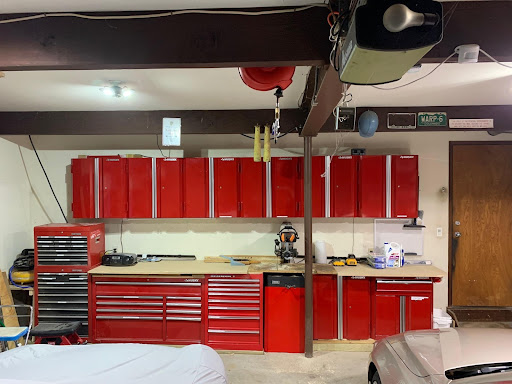
One final Thing….. 

       What did all this cost??…                


6 Husky Wall Cabinets @  $149.00 ………..  

$  894.00  

2 Husky Base Cabinets @ $229.00   ……….    

$  458.00 

1 Husky 52 inch Tool Chest ………  

$  598.00 

1 US General   8 Drawer Tool Chest     ……..  

$  499.00 

Countertop, Lighting, and Misc.        ………..    

$  250.00  


_______ 

Total    ………           $    2,699.00 

                          Show us what your Garage solution looks like!

Written By: Ted Shaw 


Luis and the other millennials may not get the joke in the title, but I couldn’t resist. The new (to me – a 2018 actually) Audi Q7 had a couple of minor flaws that needed fixing, so I found myself in a loaner 2021 Audi Q5, which turned out to have a few bells and whistles, not on my older model. First off, it started yelling at me whenever I went faster than 80mph (the speed required to avoid being rear-ended on Rt. 128 – oops, I95) on the way to Thanksgiving dinner. On the way home, now in the dark, it started dimming the high beams without prior authorization by me. It generally made good choices but wasn’t as quick to go back to high beam as I would like (older eyeballs seeking as much illumination as possible). Then it started to steer for me when I tried to change lanes. I had experienced this behavior in other cars but hadn’t realized this car had it and that I had inadvertently turned on this feature. To add insult to injury, it started telling me to put my hands on the wheel when it seemed to me they were already there. I was afraid it was going to yell “CLEAR” and put the paddles on me next. I suppose these things make cars safer, but I do worry that it encourages lower concentration.

The second non-Porsche story for this month is the tale of one of my duplicate bridge opponents, Helene. She is 99 and sharp as a tack.  At age 92, her kids chipped in and got her a five-year lease on a Mercedes. When the lease ended, they suggested that she should perhaps not drive anymore, but she promised to take Ubers at night and prevailed by noting, “and I don’t need a Mercedes.” So, she got a two-year lease on a Honda Accord Sport (I’m not sure that “Sport” gets you more than a better radio). This lease was to end in May, but she extended it for six months and recently turned in the car with the notion that she wouldn’t drive in the winter anyway. I asked her what she was going to do in the Spring. She said she thought she would buy a Tesla! – and tells the following tale:  she came into some money a few years ago and asked her financial planner – who also is her granddaughter – what she should do with it. She was told she was pretty secure; why not buy a growth stock.  Which one?  Her great-granddaughter had recently been in a science fair with a tesla coil experiment, so it was natural to buy Tesla stock. And so why not get a new Tesla for your hundredth birthday? And while she is a good bridge player, I’m not volunteering to be in the right seat if she ever puts her right foot on the floor. God love her. I’ll bet she does it.

The third and final non-Porsche story is the new Bakin’-mobile.  The Mustang is still being prepared for sale (it would make a nice Holiday gift – don’t forget to use the code PCANER for your 10% discount), but we got the new BMW (as in 1997 M3) to Thompson for a shakedown. Two of our team belong to the Drivers Club there, and we made it to the last member day of the year. (Shout out to Lou Gingerella and the other Thompson folks for a great catered lunch, relaxed atmosphere, and perfect November weather.)  While the M3 isn’t going to keep up with the Mustang on a big track, it handled beautifully, sounded great, was easy to drive quickly, and we all got down to decent – and almost identical –  lap times. There are a few nits to pick over the winter, but it will be a fun car to campaign next year.

And don’t forget to sign up for the Gala at Foxboro Stadium. Go Pats – who needs Brady anyway?

Finally: A Race Report

Just what nobody was looking for, a race report. While the COVID pandemic pretty much closed all the race tracks in 2020, the flags are up, and the pits are open around the globe. That includes the bottom feeders that I run with, like the 24 Hours of LeMons.

The Champ Car series is also back in business, and son, Rob, and I ran Watkins Glen back in May, but the Oct LeMons race in NH is always a favorite. The Fall colors of the season, cooler temperatures that the cars love, and the array of junk on the track make for a great weekend. After some testing at Palmer and Thompson, the missing horsepower was found in the turbo diesel Audi TT, and we were ready to race again. It was not by accident that we parked by the outhouses when testing that can be seen in the photo below.                 

The weather in NH was looking as good as it gets with no rain in sight, and after some practice, on Friday,  I was picked to start the race the next day. There were 108 cars circling, bumper to bumper when the track went green at every corner at the same time. We used a great radio setup with small speakers in the helmet (green, green, green ) and a push to talk button on the steering wheel, so I had the go pedal down flat before many other drivers saw the green flag waving at the next corner. Most drivers that started the race were experienced drivers, many instructors, so there was not a lot of drama as the field began to sort itself out. Over the years, as race organizers have clamped down on wild drivers, the car-to-car contact has been reduced. Not eliminated but reduced.

The TT was doing a great job of passing cars on the uphill sections of the track as the torque of the diesel engine was best at low rpm. One of the drivers I talked to later said that I went up the hill after turn three and “left him for dead” as his gas engine just didn’t have the muscle to keep up. I was about an hour into my stint when a big blue Mustang, running his first race (all bright and shiny). He chose to dive bomb me going into turn one. He wasn’t close enough to make it stick and introduced his right front corner to my driver’s door. That caused the Audi to spin with just a scuff mark on the number, but it snapped the tie rod off the right front wheel of the Mustang. With the tire pointed right and the other three pointed straight, he was able to drive it back to the pits, but that corner put out more smoke than a Southern BBQ. I was told to be wary of new drivers in new cars and went right back out, and the Mustang was back in action after about an hour and some new parts upfront.

Our second driver, AJ,  took over and did a great job staying out of trouble.  We were making good progress through the field and were up to 30th overall and 7th in class. Because of the fact that we were the last car to pass start/finish after the track went green (just a random bit of bad luck), we were excited to be making such progress. We did have a couple of visits to the Black Flag Lane that slowed our accent in the order.  One was another contact  (that was me), and another, passing under yellow was a mistake, wasn’t us.

Bob, the owner, started the next day, but a flat tire was going to start a series of setbacks.  Apparently, there was a repaired crack in one of the rims that let go, and that caused a tire to go down. Not a big deal; we had more tires. However, when the tire was put on, the crew member used an impact gun and thought that the heavy click, click, click it made was torque enough to keep it on. It wasn’t.

Three laps later, the rim was loose, and it sheared off all five studs. The wheel went on down the track, passing the TT in the process. The car was towed in, and repair began. The remaining portion of the studs were drilled out and new ones were put in with blue lock tight.                                                                     

I took the next tour and was going to do three laps to see if the fix would hold. I didn’t make it.  At the end of the front straight on lap two, the right front wheel again went its own way leaving me to take a drive through the grass, which the front spoiler collected like a NASCAR ride. This time the studs had pulled out of the hub, and I thought our day was over, but there was a used hub in the trailer, and it only took an hour to install. I think there were enough spare parts to build another race car. It really pays to be prepared.

The Tortoise and the Hare

Do you remember the fable of the tortoise and the hare where the hare mocks the tortoise who challenges him to a race that the tortoise ultimately wins when the hare falls asleep when he takes a break!

This fable is very relevant to Sim racing. As a novice, most of us, including me, find it very hard to slow down in corners, and we tend to be overly anxious to pass slower drivers in spots where there is a high risk of messing up. What we haven’t realized is that a simple mistake like missing an apex can have a relatively huge cost. Spinning costs a lot more, and just one spin can set you more back than you can possibly recover. Hitting a wall and having to pit for repairs typically regulates you to being lapped at least once.

Grasping that you become faster by going slower is counterintuitive, and even when you understand that it is the case, It is insanely hard to do when someone is on your rear bumper, or you have just been given the green flag or light at the start. It took me two years of sim racing to do it.

Another thing that fascinates me is the differences in driving styles, brake points, and lines even pro-level drivers exhibit. What they do share is incredible consistency. They can hit exactly the same line plus throttle and brake application lap after lap. The lesson for me is that it doesn’t work to try to emulate your hero’s line, brake, and application inputs. What you need to do is figure out what works best for you and your current skill level and stick with it.

The Difference and Similarities Between Reality and Simulation in Racing

A common question regards how realistic Sim racing is. The short answer is that in some aspects, it isn’t and never will be, and in others, it is amazingly realistic.

Starting with where it is different, the sensory inputs that you use are something you have to learn. In a real car, you primarily use forces to tell you what is going on. You can feel your car rotate when you lose traction, your pedal pulses when ABS kicks in, and so on. In a simulator, it is impossible to replicate the forces that you experience in a real car. Not even a motion rig can come anywhere close. Brake and turning forces in a real race car can exceed one G. To replicate one G, a motion rig would have to be able to tilt you 90 degrees, and for more Gs than that, you would need to put the rig in a centrifuge. Even you did that, you can’t replicate the force transitions without having the simulator perform the exact same motions as the race car, which would require a track-sized simulator!

A motion rig does, however, help by adding physical forces to your body that can be extremely useful in spite of being unrealistic. I find exaggerated nose-diving helps me modulate my braking, especially when trail braking. Because my motion rig has a yaw actuator, I can feel a loss of rear traction in my butt.

So how do sim racers know what the car is doing? Force feedback steering wheels and pedals can replicate the motions and forces of the real race car.

Moving to the similarities, hearing, and vision can be replicated to the extent where they are totally immersive. A single monitor is too restrictive, but triple monitors or a Virtual Reality (VR) headset can be fully immersive. Auditory inputs benefit from being unrealistic. Tire noise is the most important, and it helps to dial down engine noise to make it easier to hear subtle changes.

To enhance realism, sim racing software takes great care to replicate the tracks as accurately as possible. The track and its surrounding are laser scanned and also videoed, so they look exactly the same. The physical properties of the race track are also replicated accurately down to traction, patches, grooves, and bumps.

I have driven Lime Rock Park both in a real race car and in the simulator, and I can testify that the track feels exactly the same in the two modalities.

The last area I will cover is the interaction between cars—turbulence, wind, and drafting work exactly the same. The one difference that can’t be replicated exactly is contact. Because of network delays, the simulation software uses a predictive algorithm to guess where cars will be relative to one another in spite of the delays, which usually are in the order of 9 to 10 milliseconds. What the software can’t predict is what the driver is going to do, so on occasion, the simulator will flag a car contact that actually didn’t happen. This is called a netcode in sim racing speak. Netcodes can be identified after the fact by looking at logs taken by the central server that runs the race.

I almost forgot pit crew simulation. The sim racing services and third parties provide simulated pit crews both for fueling and repairs but also for crew chief spotting for the racer plus lap and sector timing announcements. A particularly useful simulation is fuel calculations.

The final difference is in driver attitude. A crash in real life can cost you life, limb and serious damage to your wallet . A crash in the simulator has no financial cost, no risk to your and your co-racer’s health and at most causes a relatively brief pit stop in your race. This has a real effect on race attitude in sim racing drivers towards driving at 10/10ths or even 11/10ths. It makes races unfold differently. League races tend to have fewer incidents and crashes because the league organizers discourage aggressive racing; but in some uncontrolled sim racing environments there are an inordinate number of incidents and crashes.

To give you a feel for much of I have written here, including the tortoise and hare section, you can watch this broadcast video from a recent race in the PCA National league. In that race, I was able to successfully be the tortoise!

Bang!

At the very last Autocross of the season on October 3rd, it was pretty cool, in the 50s. In spite of the cool temperatures, I did mount the Toyo race tires on the Caterham. Not surprisingly, I had wheel spin every time I put down the throttle. I did manage to avoid any spins, but in the afternoon, I was going through the sweeper from the runway to the main runway pushing the car hard when I heard a loud bang from the rear, followed by a lot of ugly sounding clanking. I was able to coast to a position where I wouldn’t interfere  with the course, and only Lev did a slowdown, mainly to hear whether I was OK. When I came to a stop, I tried to see if the car would move under its own power. No go, just the clanking noise. When the round was over the course workers around me helped push the car towards the pits, and Rob MxAlpine came out with his truck and a tow strap to get me the last part of the way.

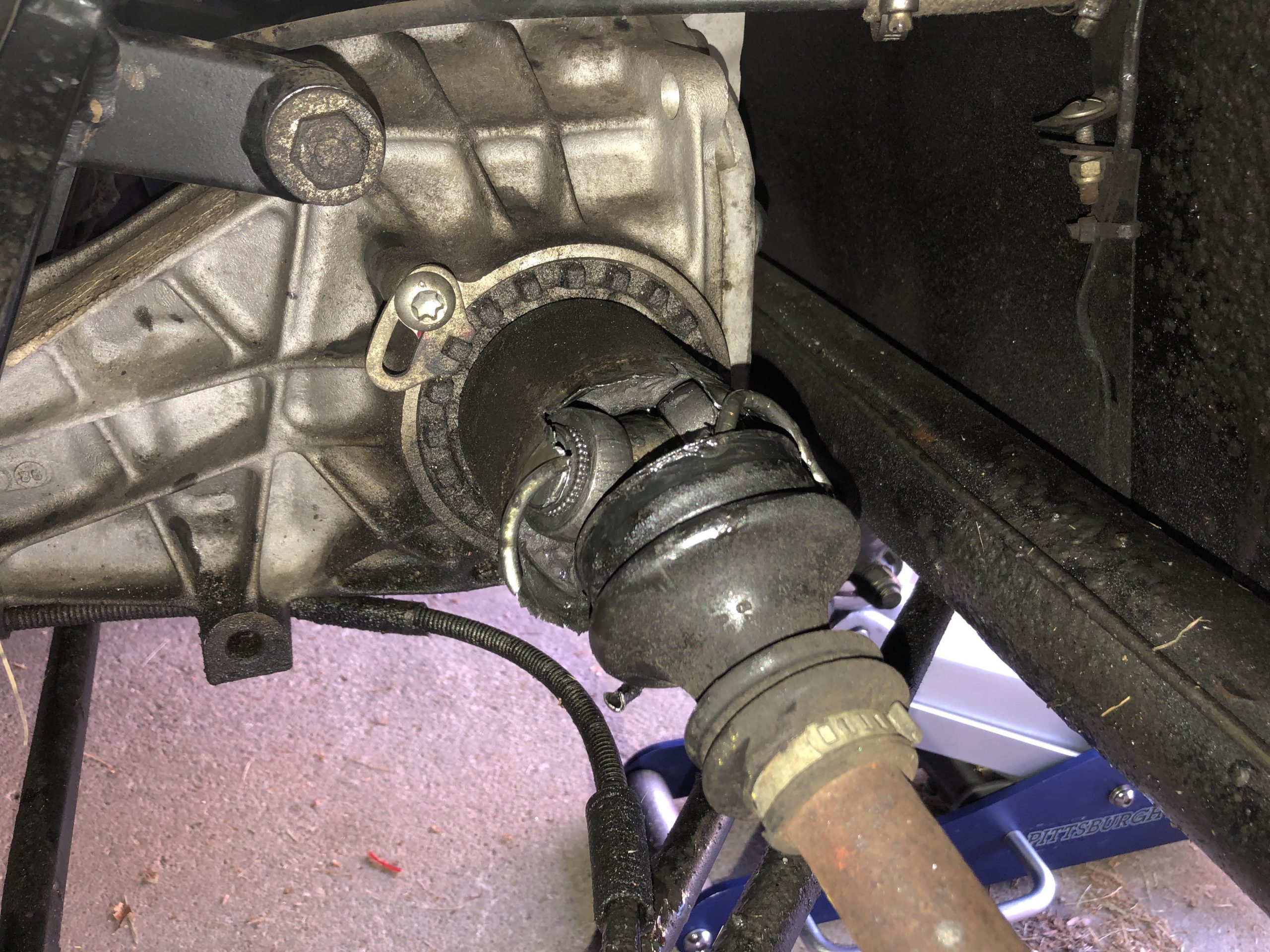
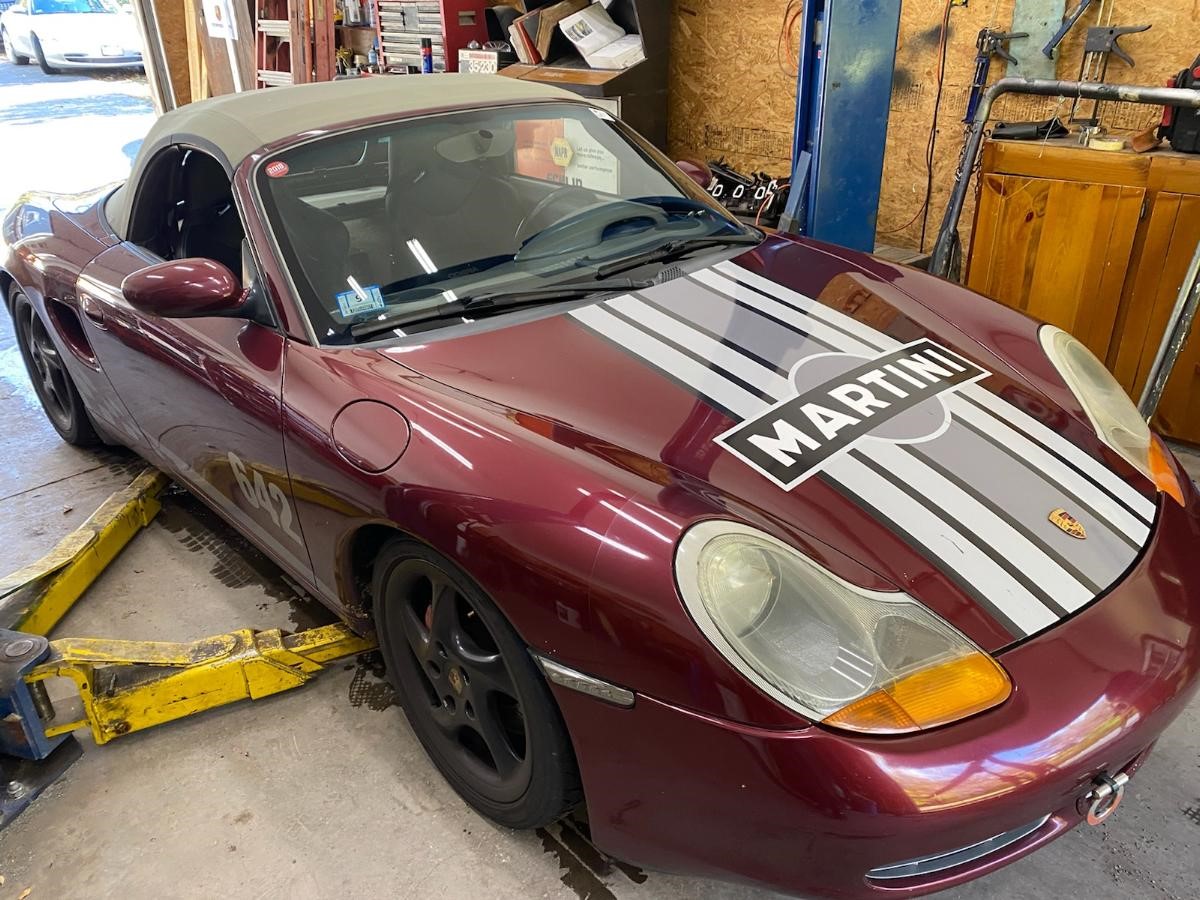
When I jacked the rear up it became very clear what had happened: the universal joint on the left half shaft at the differential end had shredded itself—lots of bent sheet metal. Ollie was extremely helpful by allowing me to load my car into his trailer and take it to my home while I led the way in his Boxster.

The next day I did some more investigating but was limited by my inability to find a 41 mm socket locally to remove the hub nut. Fortunately, I have all winter to get the car back into shape. I have ordered two half shafts, which only can be sourced from Caterham, plus two hub nuts. I will also have to send the left front damper back to Spax in the UK for a warranty repair, so the poor Caterham will spend the winter on jack stands in the garage.

The learning process

I have subscribed for a couple of years to Ross Bentley’s Speed Secrets emails and really enjoyed them. Several times I have replied to them, and he has always responded, which is unusual. For quite a while, I have kept suggesting that he set up a training service for sim racing, and a few weeks ago, he asked me to beta test exactly that. He was also looking for a few bodies to help him run the service, and I immediately stuck up my hand and yelled, “Me! Me!”. He took me up on the offer, and I am managing and moderating the Discord server. There are a couple of other team members that fill other roles, and it has been and looks to be a fun thing to do. Take a look at https://simraceracademy.com/

Ross is also really great at responding to musings. One I haven’t shared with him, but will very soon is about how people learn. Here it is:

Learning to drive a race car is like any other learning process. You start by having a goal, like learning to threshold braking and transitioning to trail braking. So you know what you want to. It sounds simple, but braking performance depends on a huge number of factors, some of which are track temperature, road surface, tire wear, corner shape, camber, slope, car weight distribution, brake bias, and more! If you don’t take all factors into consideration, bad things happen!

You can take two approaches. 1. Emulate precisely what the better drivers do on every corner of the track. The trouble is that you have to find an expert to emulate every time you get to a new track or car and that what you emulate only works if the conditions are exactly the same as when the expert ran it. 2. Learn what the expert learned to be able to figure out how to brake optimally in every condition. I call 1. the what and 2. the why or how. To become really good, I believe you have to take approach 2. But there is a lot more to it. Even if you know the theory, it is a different matter to put it into practice, so you have to also learn that. Initially, and possibly for a long time, you will have to focus your mind on doing that, but that may distract you from performing other tasks well, so eventually, you will have to apply the task unconsciously, just like you automatically hit the brake pedal when a kid runs out in front of you. You don’t think, “kid on the road, I may hit it, need to stop the car, do that by moving my foot from the accelerator to the brake pedal, push really hard.” No, your foot is hard on the brake pedal without any thought process. You may feel that you are plateauing as you go through the process of moving the application of theory from conscious to automatic, but in reality, you are progressing all the time, getting ready to go into the next phase of learning.

-Anker

“Winter is coming”….

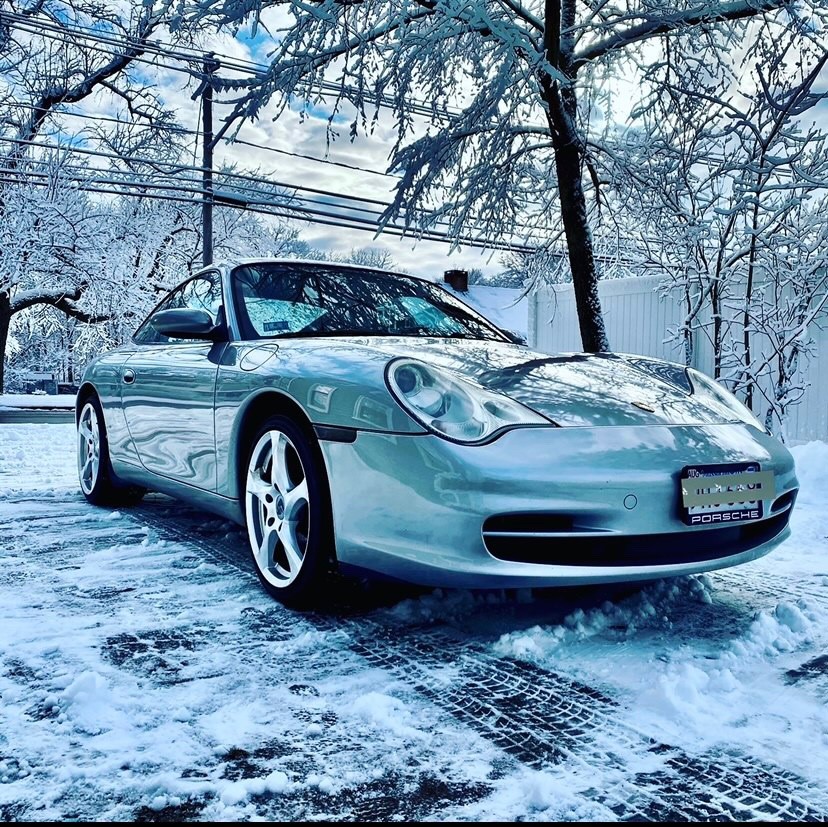
And walking to my car the other morning, it was a brisk yet sunny 37 degrees when I noticed the webbed frost, spread across my silver 996, from the fried eggs to the hips. Having spent the night at my parents’ place, it spent the night outside, but typically, my pampered 911 sleeps in an insulated (and hopefully soon to be heated) barn. Conversely, Big Alice, our 06 Cayenne S Titanium is a fearless beast. The SUV sleeps outside, impervious to the climate and ready for any adventure – sand, city or snow. Hands down, this Porsche wears the hosen in our haus and I fall in love with it more and more with every time I drive it (the caveat being, it’s also Jane’s daily driver)…do we need two Cayennes? 

Seeing the iced-over car, I also thought about Paul Skinner, who came over the other day to get his Boxster ready for hibernation. Then it occurred to me… that I too, need to prep my 911 for the Winter months.

So I went down the list of what that entails and what I needed to do…

  • Trickle charger – no
  • Cover – no
  • Mothballs – gross, and absolutely not
  • Fluids flushed and topped off – check
  • Carpet under the tires to avoid flat spotting – no

Ok so far so good! Then I considered additional Winter necessities:

  • Hose to spray the car down in between drives and proper washes (when not freezing) – check
  • Drains cleared, to avoid interior leaks – check
  • Blizzak wrapped winter wheels – safety first – check
  • Mini-Shovel, blankets and ice scraper in the frunk, can’t get stuck without ‘em– check
  • Ski Rack to shred the slopes – check
  • Tire gauge, compressor and basic tools – also in the frunk- check
  • Service and maintenance being up to snuff, because they should be anyway – check

Alright, I’d say my 911 is prepared for the Winter!

Some of us at NER may seem crazy to drive our Porsches year-round, but for some of us at NER it seems crazier NOT to drive our Porsches year-round.

To quote our year round,718 Spyder driving, Joe Cracco, ”Just try it once.” And if you already do it, join us for our “Winter Beaters” line up consisting of tech sessions, Cars and Coffee meet-ups (long johns recommended), SIM Racing and other events to keep having fun in the frigid months ahead.

Lastly, if you have cool ideas (no pun intended) or would like to volunteer for any events, please reach out and let’s have another awesome season at NER.  

See you soon PCA Crew!

-Luis

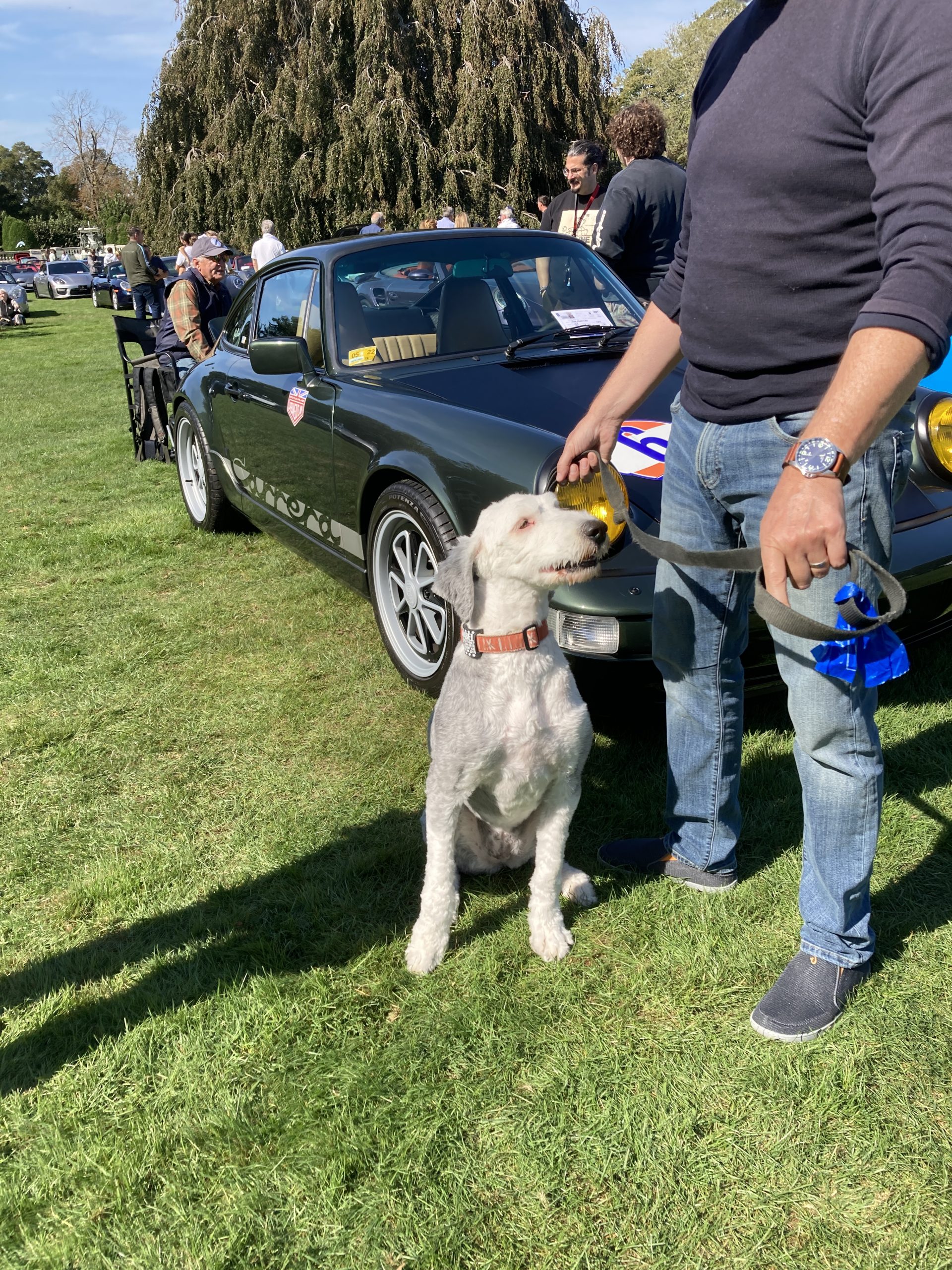
October was a nice month of car events starting with the NER Concours at the Elms in Newport. David Melchar, Chair for the last two Concours, apparently has sold his soul to the Devil in return for unbelievable weather. He also has successfully recruited a great team of volunteers, and the 2021 event was equally as well run as the one at Chateau-sur-Mer in 2019. This year I was a volunteer judge, and they wisely assigned me to score the cleanliness of the rear storage areas of Macans and Cayennes (no, I’m not making that up). They were all really clean. I was so good at my job that Larry Levin, who takes most of the photos that you find on our website, won a trophy with his white Macan (but not first place – don’t blame me, Larry, I gave you a perfect score!).

I rode down to Newport with our Treasurer, Kristin Larson, and after the awards ceremony, we walked down to the Tennis Hall of Fame, where the Audrain parade cars were parked. What a show! Click here to watch a few minutes of the cars as they drove off — all in all, a great way to spend a fall day.

The following Friday, I was at Palmer to instruct at one of their “Arrive and Drives” (they have a fleet of caged Miatas, and you pay $500 for four instructed sessions).  Another day of perfect weather, and I had one of the best students ever.  She had only been on a track once, seventeen years ago, but by the end of the day, she was hitting all the apexes and driving most of the corners close to the limit. It’s a nice program – the Miatas aren’t pretty but work well and are fun to drive. To add to the day, both of the previous Jamaican Bakin’ vehicles were there:  Miata and E30. Mike has made some serious upgrades to the Miata and was kind enough to let me take it out. I’d like to say it was an old home week, but the truth is the old home has been heavily renovated (better engine, new suspension) and drove way better than I remembered. Really nice that the cars are in good hands and being enjoyed.


The third October event was the annual Charlie and Martha Dow Rally (switched from a tour because rallies are easier to run and perhaps more fun anyway). There is a full report elsewhere, but I’ll throw in a few comments.  1)  We got lucky with the weather – rain was predicted, but it turned out gorgeous.  2)  People really seemed to enjoy it, and there were quite a few “newbies.”  3) Anker and Lisa did a great job with the route and the logistics.  4)  Charlie and Martha’s family was very well represented and appreciative of keeping Charlie’s memory alive.  (Eric commented that Martha had objected to the previous title of “Charlie and Martha Dow Memorial Tour” since she is very much alive and is now pleased that it is the “Annual” rally.)

In other news, there are two new (to me) vehicles in the extended fleet. I finally gave up on the Pilot and upgraded to a used Audi Q7, which will hopefully tow much better. The primary user of this vehicle was not happy to discover that it actually has quite a bit less room inside than the Pilot (not to mention her preferred Odyssey) and fewer places to store stuff and transport groceries. She does admit that it drives better. I was foolishly optimistic that Turbo (dog), who pants and shakes during car rides, might be calmer in a quieter vehicle but no such luck.

The other addition is the latest Jamaican Bakin’ race car:  a BMW E36 that will replace the Mustang (still for sale – don’t forget to use code PCANER for your 5% discount). While we are taking a step back in terms of speed, this will be in compliance with AER rules and also be eligible for Champ car events. Dave, Dennis, and Chip retrieved it from Maryland down and back in the same day – road warriors!  Some assembly required – a few tweaks but mostly getting a good seat that works for all of us. We hope to get a few laps in at a Thompson Club day before the snow flies. Speaking of which, make sure you get out and enjoy these last few weeks before the cars go to bed for the winter.

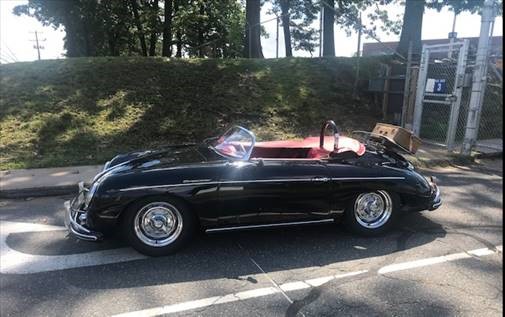
The 356 Southern Drive has been every other year event now since 2007. It is a gathering of 356 owners in the North Georgia mountains for a couple of days of driving, eating, drinking, and talking about our cars. There is no car show (more about that later), no tech sessions, and no dress-up dinners. It’s just the best laid-back group of early Porsche owners to be found anywhere.

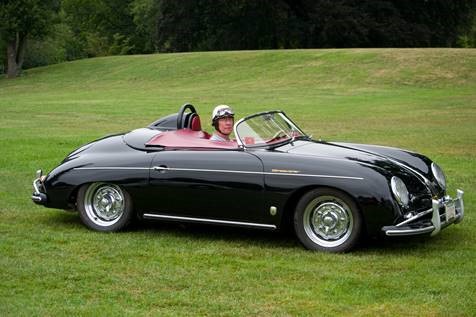
A few of us from the North have been joining the crowd since about 2011 on the 2400-mile trip down and back. I had promised brother Bill to take my Speedster this year, so I reconfigured it to install the convertible top that had been stored in the garage loft since 2001. He’s been taking his every time, but I always found a reason to leave Blackie at home. Something about not wanting to get wet again. I also had a new tonneau cover just made by my daughter-in-law, Marie, and it looked great.

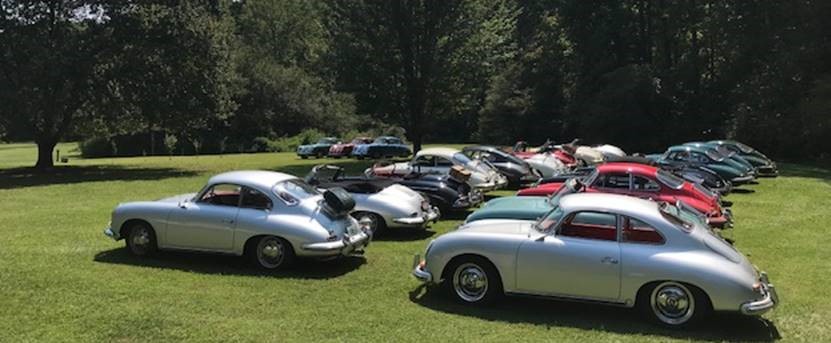
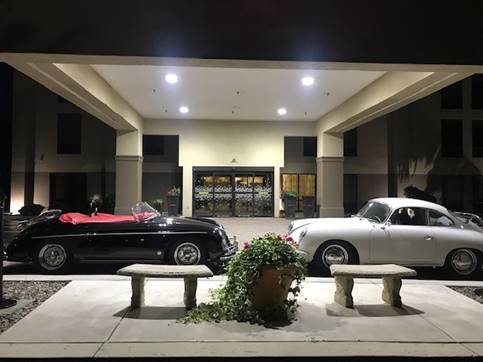
We start the journey usually in a Mass Pike rest area and collect others along the way. The first stop this year was near Hershey, PA, where the Hampton Inn folks offered us covered parking to add some style to the property.

Brother Bill joined the pack in northern Virginia where Rt 66 meets I 81, and we rode on to Wytheville, Va to have dinner at the Log House 1776 Restaurant, a local landmark. We were at a Hampton Inn there too but didn’t get covered parking, and sure enough, it rained during the night. I can attest to the tonneau cover holding water because I forgot to check the forecast and didn’t put the top up. I’m still learning.

We normally pick up two more drivers in Wytheville, but they were a day ahead of us, so it was just the three Tubs going down the road waving at folks taking pictures from their SUVs. Great fun.

 Arriving at the lodge on the third day, we found many old friends and some new folks that we had only talked to on the phone. Dinner in Helen the first night found us at the Hofbrauhaus along with 356 Registry Trustee Cliff Murray and wife Jean, along with Tom Olson all the way from Wash state in his blue ’65 356 and racer Tim Baker and his wife, Shonney.  

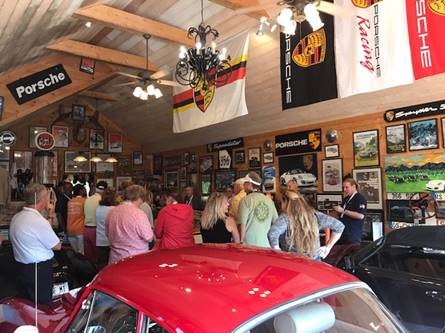
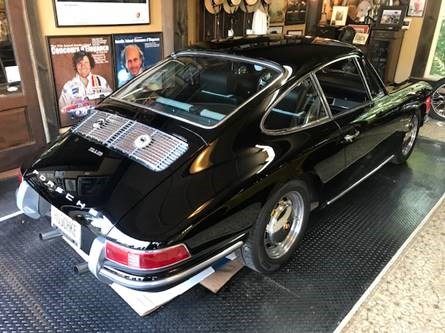
Friday was a great ride for half the attending cars and a luncheon visit at the Wolf Winery owned by a fellow Porsche enthusiast who owns 6 P cars, including a Speedster, a 356 Notchback, and a black 912. That garages (there were four that I counted) had more photos and stuff than most museums.

There were 25 cars in our caravan to the winery, and it seemed that folks in the small towns we passed through had all come out to see the parade. We rolled back through the woods in time for a BBQ dinner at the lodge and lots of 356 talk, well into the night. It came with some live country music but no banjos.

We spent the next day with a smaller group driving the mountain roads and played tourist in Dahlonega, GA site of the first US gold rush in 1829. Of course, we had a pig roast on Saturday night with more music.

Sunday was the final day, and what else but another scenic drive to another winery. We lined up at the lodge, ready to make our final group drive.

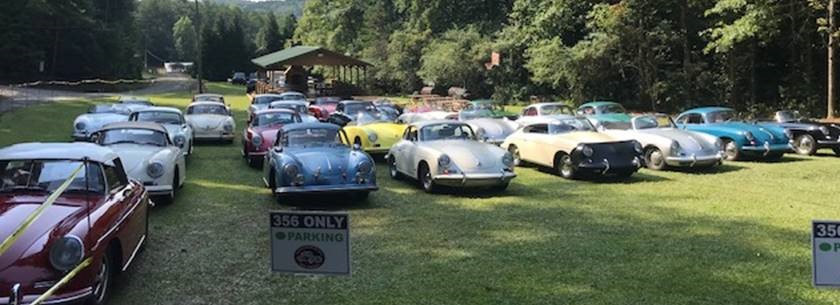
 Arriving at Glen Ella Winery, we were asked to line up on the grass so that the owner could view all the cars. Not being a Porsche owner, she had been asked to select her favorite Tub. That is as close to a car show that we get on the Helen drive.

The lunch was great as always, and after recognizing the staff for all their planning and hard work on the Southern Drive, the owner was asked to announce her pick and award a bottle of their best wine. It was Blackie.   After all that, I guess I’ll be keeping that car for a few more years. Blackie never missed a beat, nor did any of the other Tubs (one hit a bear, but both the bear and the car kept going) and got 30 mpg.   It may not be as fancy as a 911 C4S or as fast as a Turbo S, but it sure made the trip more fun than the title suggests.

Another nicely run NCR event at Tamworth, this time with really nice weather and thus no excuses for my sorry driving.  My fastest session of the weekend was the first of the event – on a damp track – and I never improved from there. It seemed like I was pushing fairly hard, sliding around quite a bit, and I was quick to blame my tires.  Mr. Frugality believes he can go a whole season on one set of tires (the car is so light they don’t cord), but I thought perhaps they go off after a lot of heat cycles (I was up to 35 or so).  But data don’t lie. When I got home and compared that event to my previous better runs, there was no evidence of a lack of grip and a lot of evidence of not braking late enough or hard enough. I continue to struggle with not using braking markers, and I was giving up almost a second in Turn 1. You can’t teach an old dog new tricks, so I’m lucky that I’m just a pup and will obviously get better.

Speaking of pups, please enjoy Part Two of the Dogs of Tamworth.  I know that cute kitties might be better clickbait, but I couldn’t find any at the track.  Note in particular that Misty and Butzi are the pets of Kristin Larson’s Mom (and you know why Butzi is named Butzi!).

On to less happy tails (tales), let’s wander into the Jamaican Bakin’ Team garage and see how the Mustang is coming along.  In case you missed previous episodes, I’ll remind my reader that Sally’s motor blew up at the Watkins Glen American Endurance Racing event.  At considerable expense, we bought a replacement motor and have been slowly doing the swap (Nick is at race tracks all over America, and Chip has been struggling to relocate his machine shop).  Dave, in his role as Coroner, performed an autopsy on the victim and the picture shows the corpse.  Still not clear why the connecting rod let go, but the results are unattractive. The new Sally fired up right away, and so now we just need to get it to the dyno and put the snout back on. 

However, the bad news is that AER is changing their rules and for 2022 will not allow a car to run with a power to weight ratio below 9.  The Mustang, svelte thing that she is, weighs in at 3,200 pounds, and the old motor put out 400 hp at the rear wheels.  The new motor, with the fancy intake, is good for over 500 hp. Even the most math-challenged will agree that we’ve got a problem. We are advised that with a restrictor plate we can detune down to the necessary ~360 hp, but the car would then need to be short-shifted at around 4,000 rpm to stay in the torque band. This on a car that could put out over 500 hp and rev to close to 8,000 rpm.  What a waste!  And our experts pointed out that we would be better off driving a lighter car with less horsepower.  A zoom meeting was arranged to discuss options, and the decision was reached to move to a new car. Once the car is dyno’ed (we’ll have the specs to use in the sales brochure) and tested (at a Thompson club day) we’ll post it on Racing Junk and see what happens.  If anyone is interested in a roaring beast, just let me know!  (Use code “PCANER” for a 5% discount.  Buyers’ commissions are offered.  Driven on a closed track by a professional driver.  Do not try this at home.  Etc.)

So what is next?  Prior to the Mustang purchase, we had been looking at E36 or E46 BMW’s, and those certainly are candidates. Some of the JB team have a Boxster or Cayman that could be pressed into service, perhaps. Dave is a big fan of Acura Integras (front-wheel-drive car? C’mon!).  Or perhaps the answer is, as always, “Miata?” (With the Acura motor swap.)  Gives us something to do over the winter.

-Bill Seymour